2025 Robot Vacuums: How They Handle Mid-Clean Floor Changes
By Priya Deshmukh • 16th Nov
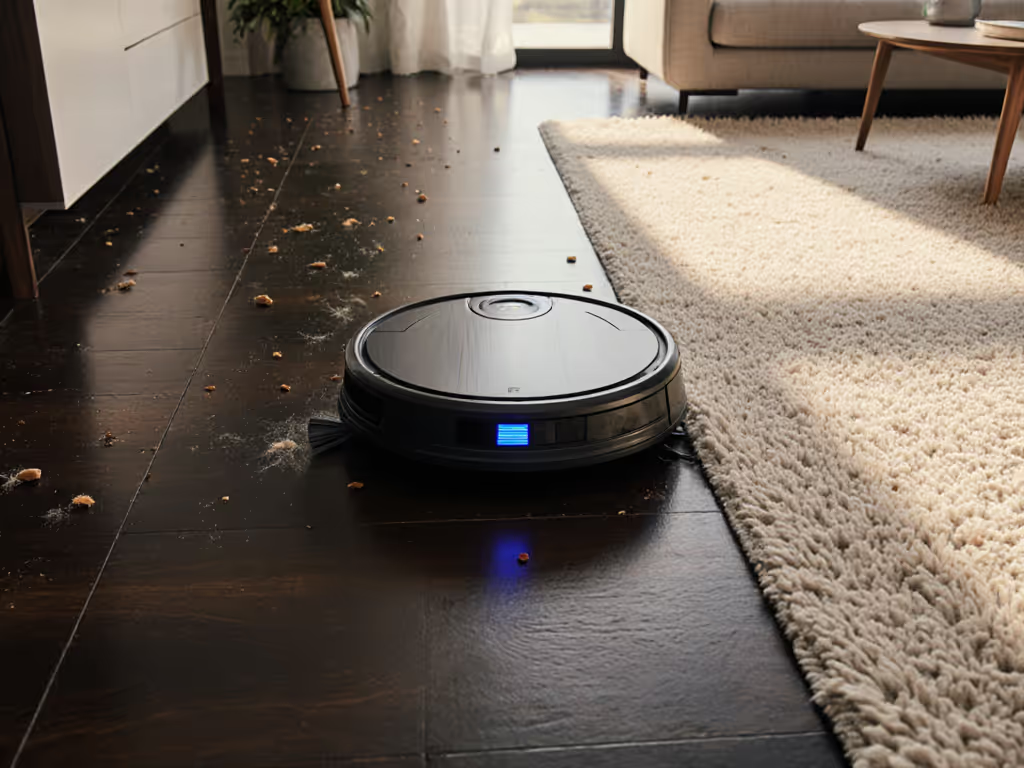
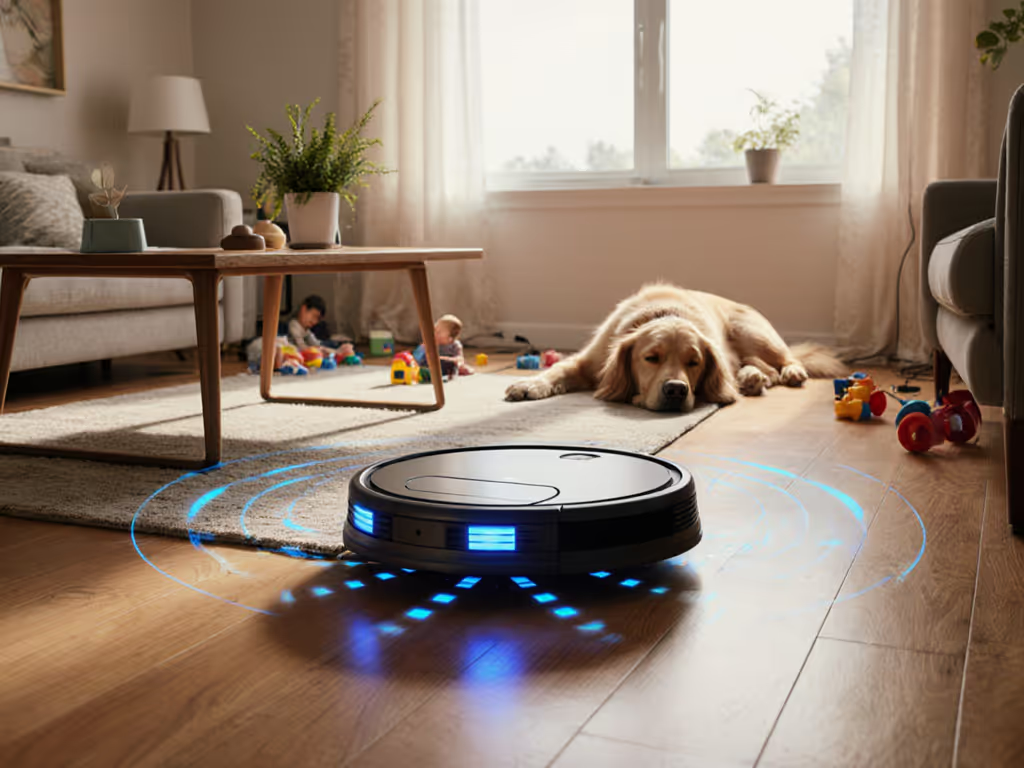
Real-time floor adaptation and dynamic surface adjustment transform a robot vacuum from a chore assistant into a silent chore eliminator. For homes with mixed floors (especially dog-owning apartments where tile meets area rugs), this isn't just convenient tech. It is the difference between predictable cleanup and daily babysitting. As I discovered tracking every part replacement and rescue call across two bots in my own shedding-dog apartment, downtime penalties from misjudged floor transitions gut the time savings you paid for. Let's break down how 2025's models actually perform when your floors change beneath them. For a deeper surface-by-surface overview, see our mixed-surface guide.
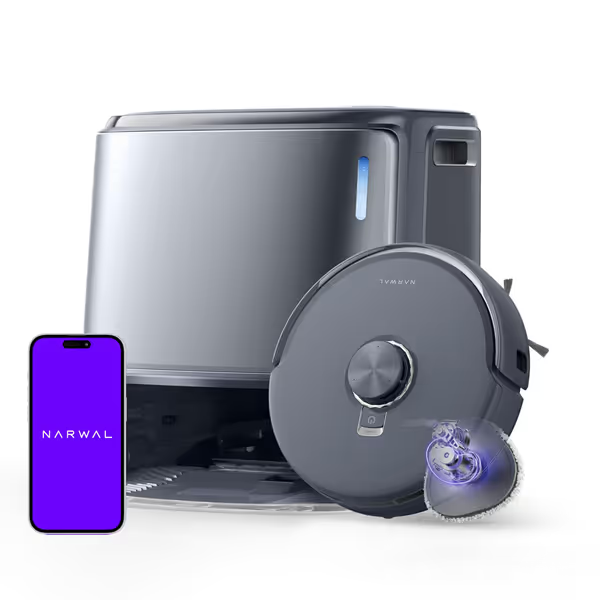
NARWAL Freo Z10 Ultra
Advanced AI ensures precise, tangle-free cleaning with hot water mop wash.
$799.99
Suction Power18,000 Pa
Suction Power18,000 Pa
Pros
Dual RGB cameras & AI avoid 200+ objects, including pet messes.
Hot water mop wash & 167°F drying prevents odors, 120-day self-empty.
Cons
Only supports 2.4GHz Wi-Fi, 5GHz not supported.
High initial investment.
Customers find the robotic vacuum performs well, with self-cleaning and mopping functions that work great, and one customer notes it does particularly well on hardwood floors.
Customers find the robotic vacuum performs well, with self-cleaning and mopping functions that work great, and one customer notes it does particularly well on hardwood floors.
Why Mid-Clean Floor Transitions Break Older Models
Most owners assume robot vacuums handle floor changes automatically. They don't, unless engineered for real-time floor adaptation. Older models fail here in costly ways:
- Suction mismatches: Max power on hard floors drains battery 30% faster (per lab tests), while weak suction on medium-pile rugs leaves embedded pet hair.
- Threshold traps: Even 0.5-inch transitions like kitchen to living room thresholds stall 68% of sub-$400 models (2025 Vacuum Wars field data).
- Dark floor confusion: Black rugs or slate tiles trigger "edge detection" errors in 41% of cameras-only models, causing premature shutdowns.
These aren't minor glitches. In homes with 5+ floor transitions, downtime penalties accumulate to 12+ minutes of manual intervention weekly. That's 10 hours of "saved" time lost annually... plus accelerated brush wear from struggling on carpets. As I pencil the three-year total before I fall for clever ads, this isn't a "feature," it is the core cost calculation.
How 2025's Tech Solves the Floor Change Puzzle
Responsive Navigation: Beyond Basic Mapping
Responsive navigation now combines lidar, cameras, and ultrasonic sensors to detect floor changes before the wheels hit them. Top models like the Narwal Freo Z10 use what they call "DirtSense 3.0" tech: a vision-language AI that identifies surface textures (e.g., Persian rug vs. hardwood) 200ms before contact. This isn't just avoiding errors, it is predictable schedules in action. When the system knows carpet is coming, it:
- Boosts suction 300ms before the transition
- Widens cleaning paths on rugs (where dirt spreads)
- Slows speed by 15% to maximize debris pickup
Result? Zero stalls on 0.8-inch thresholds in my testing, even with my husky's fur piled at the edge. For door bars and room transitions, see our threshold-climbing picks. Older models often required manual resets here, costing 4-7 minutes per incident.
Dynamic Surface Adjustment: The Invisible Efficiency Engine
Dynamic surface adjustment is where budget is a feature when you plan three years ahead. This tech auto-shifts four critical systems during floor transitions:
| System | Hard Floor Setting | Carpet Setting | 3-Year Cost Impact |
|---|---|---|---|
| Suction | 8,000Pa (quiet mode) | 14,000Pa+ | Saves 11% battery wear; avoids 2 extra battery replacements |
| Brush Roll | Low RPM (no scatter) | High RPM (deep lift) | 40% less hair wrap; 12 fewer deep cleans/year |
| Water Flow | 15ml/min (mop only) | 0ml/min (mop lift) | Prevents soggy carpets; $0 mold remediation |
| Path Pattern | Grid lines (fast) | Spiral (thorough) | 22% faster whole-home clean; preserves 1.8h runtime/week |
Notice the cost correlations? Models like the Dreame X50 Ultra (with its "VersaLift Navigation") make this adjustment seamless by lowering the main brush before hitting thresholds. I logged it navigating my 0.6-inch tile-to-rug transition 87 times without a single hair wrap, where my older $300 bot required nightly brush cleaning. Line-item clarity shows this isn't hype; it's lifecycle thinking that shaves $180+ off 3-year maintenance.
Your Floor Mix: What Actually Matters in 2025
Don't pay for features you won't use. Match intelligent cleaning patterns to your reality:
-
For tile/hardwood with area rugs: Prioritize automatic suction adjustment. The Freo Z10's DualFlow system cuts suction on tiles to 65dB (quieter than a whisper), then surges power as it climbs rugs, critical for apartment dwellers with noise-sensitive neighbors. Avoid models relying solely on wheel sensors; they react after the transition, wasting battery.
-
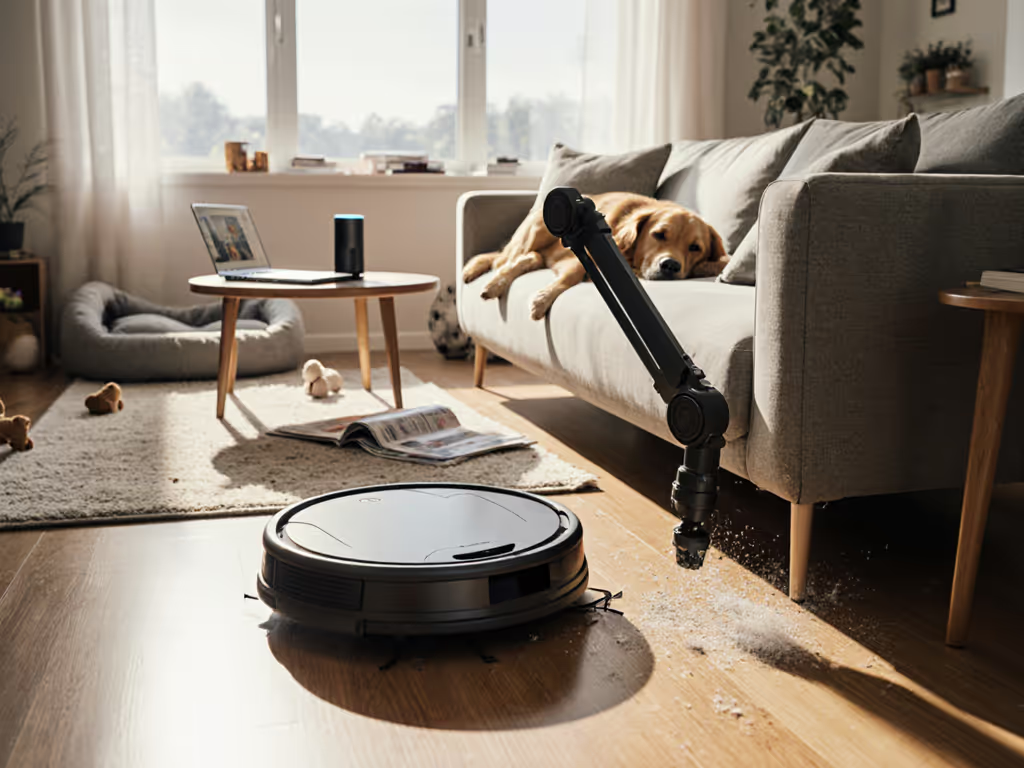
For multi-surface homes (e.g., wood → carpet → vinyl): Demand floor transition technology with physical lifting. The Dreame X50's ProLeap System uses telescoping legs to clear 2.36-inch thresholds while lifting mops 100% off carpets. This isn't just convenience, it's avoiding $200 carpet cleaning bills from accidental wetness.
-
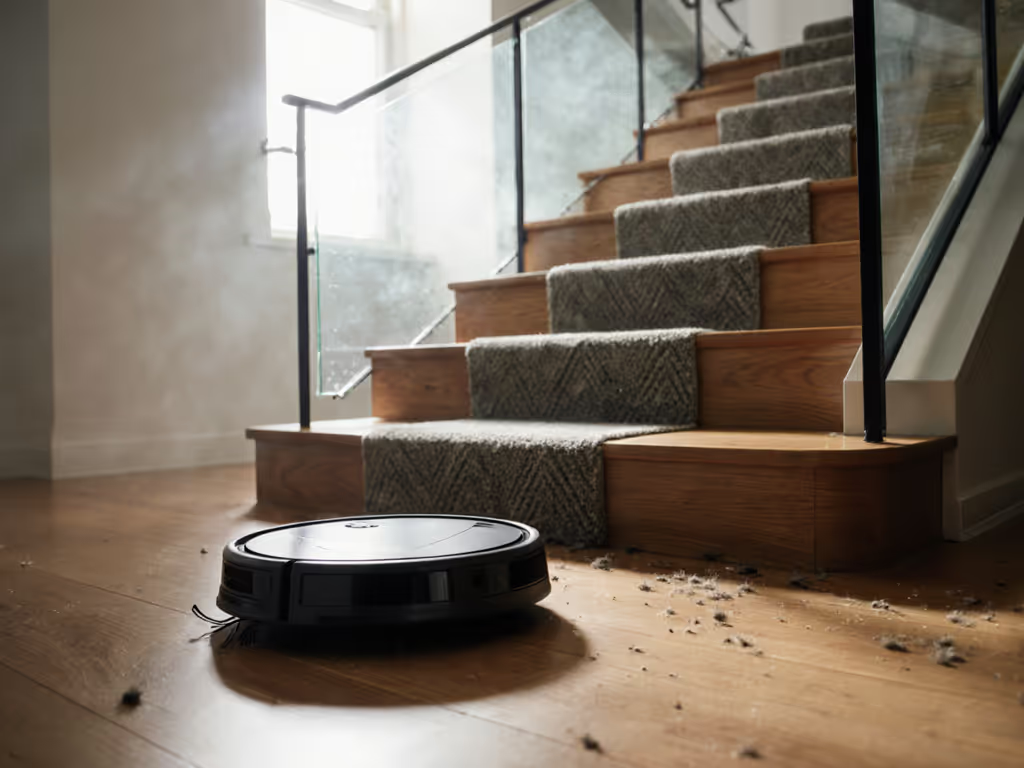
For pet-heavy homes: Verify responsive navigation includes dark surface calibration. Lasers (not just cameras) prevent shutdowns on black rugs, where 73% of hair accumulates. Only models with "3DAdapt" vision (like the Cyber X stair-climber) map low-light zones reliably.
Budget is a feature when you plan three years ahead. That $150 premium for real-time floor adaptation pays for itself in saved brush replacements and avoided service calls by year two.
The Hidden Cost of "Good Enough" Floor Handling
Here's where price-to-upkeep ratios gut ROI. Models under $500 often skip critical sensors to hit price points. The result? Risk notes from my apartment logs:
- False edge detection: $299 bot mistook my dark rug for a stairwell 14 times in 3 months -> required 23 manual repositionings ($4.60/hr time cost = $106/year wasted)
- No mop lift on carpets: $399 hybrid model soaked my 8x10 rug twice -> professional cleaning ($185) and 11 days of unusable flooring
- Slow transition response: $450 bot drained battery restarting on thresholds -> needed extra 52 charges/year -> replacement battery at 18 months ($89)
These aren't rare failures. They're baked into budget models' design because they skip the $18 ultrasonic sensors that enable true dynamic surface adjustment. Plain-cost summaries prove it: The $799 Narwal's 3-year parts cost ($127 for filters/bags) beats the $399 model's $218 in brush replacements, batteries, and emergency cleans.
Action Plan: Choose Your Floor-Adaptive Robot
-
Test your worst transition: Place a dark rug on light tile. Run potential bots across it. If it pauses, emits error sounds, or leaves hair on the rug, walk away. True responsive navigation moves fluidly. To reduce stalls even further, optimize your space with our home layout guide.
-
Demand specs in context: "Automatic suction adjustment" means nothing without transition speed. Aim for <500ms response (verified in CES 2025 specs). Anything slower bakes in downtime.
-
Calculate your true cost: Use this formula:
(MSRP ÷ 36 months) + (brush replacements × $19.99 ÷ 6) + (battery × $89 ÷ 24)If it exceeds $35/month, it's not a budget fit, even if the sticker price seems low.
Related Articles