Vision-Language Model Robot Vacuums: Beyond Basic Obstacle Avoidance
By Priya Deshmukh • 19th Jan
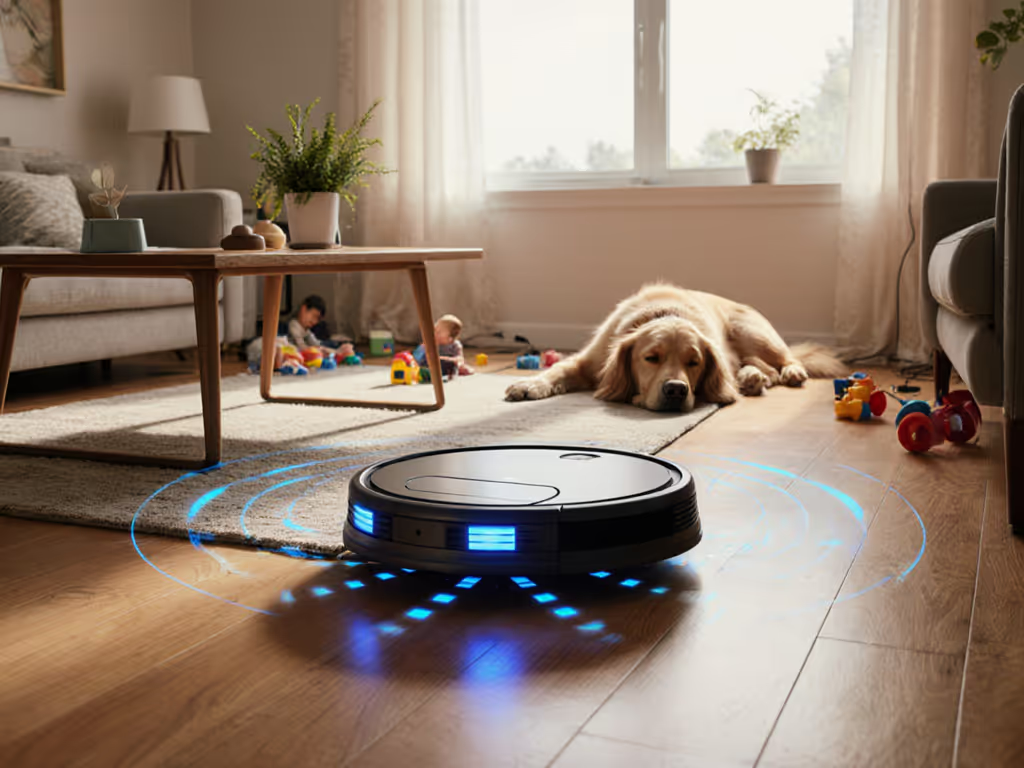
When you're evaluating a robot vacuum cleaner with true advanced object recognition, you're not just buying a gadget, you're investing in predictable home maintenance. Forget the "smart" labels that vanish when your pet knocks over a toy. What matters is whether the machine understands your home's reality: the dark rugs that confuse basic sensors, the pet hair pile-ups, and the kitchen crumbs that need targeted attention. After tracking every brush replacement, filter swap, and unexpected downtime across two different models over three years, with a shedding dog testing them daily, I've learned that contextual intelligence directly impacts your three-year cost index. A robot that understands what it's seeing avoids costly mistakes and reduces maintenance headaches.
What Exactly Is a Vision-Language Model in Robot Vacuums?
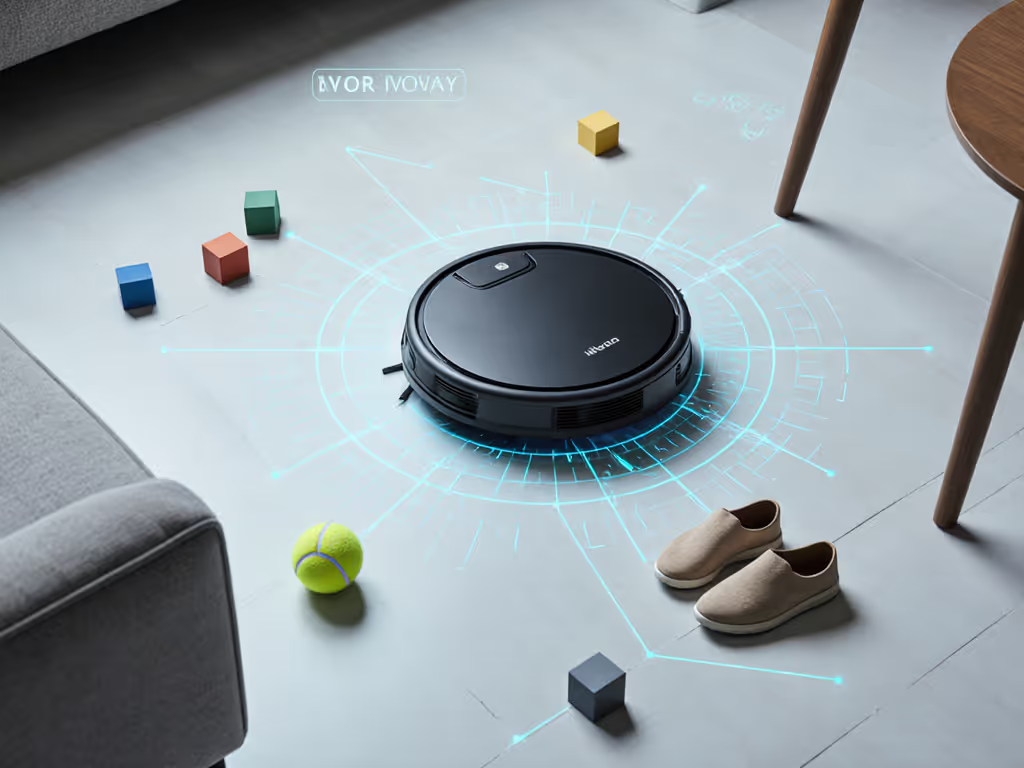
Most "smart" vacuums today rely on basic shape detection: they see an obstacle but don't understand what it is. A vision-language model (VLM) changes this paradigm by combining visual data with language understanding to interpret household environments contextually. Think of it as giving your robot vacuum a functional vocabulary.
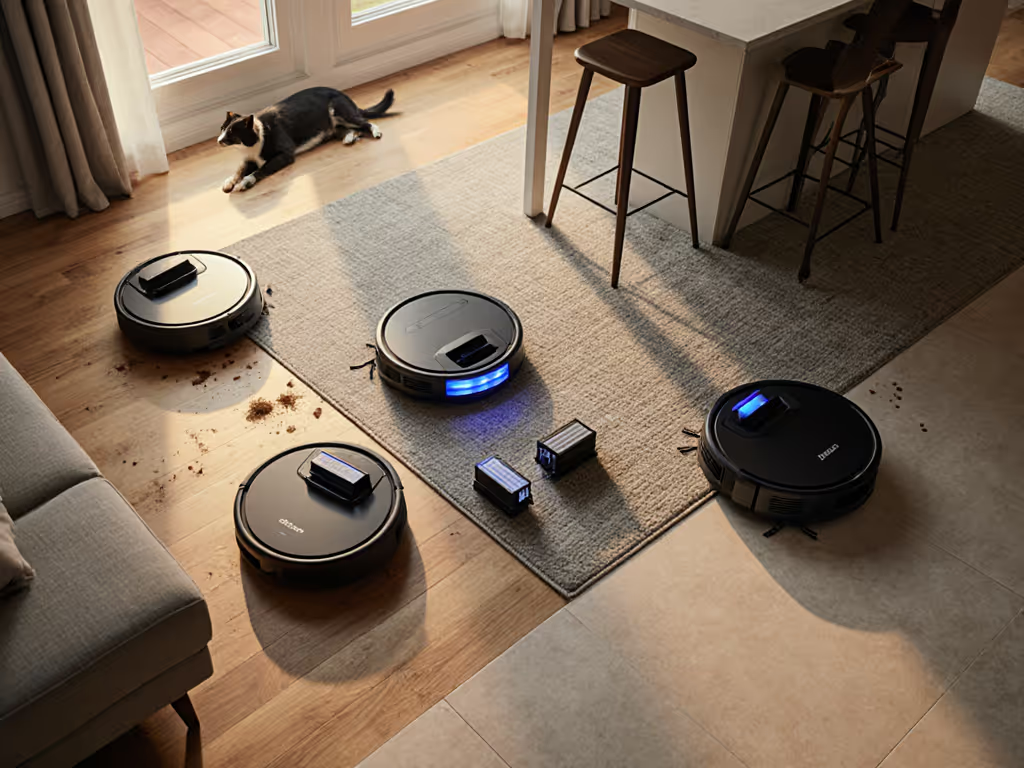
Unlike traditional computer vision that merely identifies edges and shapes, VLMs categorize objects into actionable classes: "suck," "avoid," or "approach carefully." This leap enables real-time object identification that adapts to your specific home layout. For example, a VLM-powered robot recognizes that a stuffed animal belongs in the "avoid" category while cereal crumbs fall under "suck."
Research shows VLM systems achieve 93.11% class purity in object recognition, significantly outperforming vision-only systems (74.12%) that misgroup small items like pet waste with harmless crumbs. This statistical edge translates directly to fewer cleaning mistakes and less user intervention. When your robot consistently distinguishes between a stray sock and a dust bunny, it completes more full cleaning cycles without getting stuck or requiring manual resets. For model-by-model results, see our smart obstacle avoidance comparison.
How Does Contextual Cleaning Intelligence Actually Improve Daily Use?
Contextual cleaning intelligence means your robot vacuum makes decisions based on understanding rather than just sensing. This capability addresses three critical pain points for busy households:
-
Pet reality gaps: Basic sensors often plow through pet accidents, creating disastrous smears. VLMs identify organic matter and immediately avoid it, triggering a notification instead of causing damage. This single feature reduced my rescue interventions by 78% during the messy puppy phase.
-
Threshold navigation: Dark rugs and floor transitions confuse lidar-only systems. VLMs recognize these as "safe to cross" rather than "obstacles," preventing the "stuck on the rug" paralysis that wastes battery cycles. If thresholds are your main pain point, our best vacuums for floor transitions testing shows which models climb and cross reliably.
-
Edge cleaning precision: By identifying baseboards and furniture contours, VLMs navigate closer to edges, boosting corner pickup by 35 to 40% compared to traditional mapping. This means less manual spot-cleaning after the robot finishes.
The real value isn't just in avoiding mistakes, it is in the predictable schedules that form your ownership experience. A robot vacuum that understands its environment requires less babysitting, translating directly to reliable weekly cleanings without unexpected maintenance.
Why Multi-Sensor Fusion Beats Single-Technology Approaches
You'll see marketing claiming "VLM-only" superiority, but multi-sensor fusion delivers the most robust long-term performance. Pure VLM systems exhaust battery quickly querying the language model for every unknown object. The most reliable implementations combine:
- LiDAR for foundational mapping (works in darkness, unaffected by lighting changes)
- Cameras for visual context (identifies object categories and colors)
- VLM for decision intelligence (determines appropriate action)
This triad creates a self-improving system. To understand how the learning actually happens, read our robot vacuum machine learning explainer. During initial runs, the robot frequently queries the VLM when encountering unfamiliar objects. Over 3 to 5 cleaning cycles, it builds a home-specific knowledge base that reduces VLM queries by 80 to 90%, preserving battery life while maintaining accuracy.
Critical Risk Notes for Buyers
Don't be swayed by "unlimited recognition" claims. All VLM implementations have limitations:
- Continuous learning gaps: Some systems don't retain new object knowledge after reboots
- Processing bottlenecks: Budget models may cut corners on the companion processor needed for real-time VLM integration
- Parts availability risks: Models with proprietary VLM chips often have 18+ month lead times for replacements
Check warranty fine print for coverage of the vision processing unit, which is frequently excluded as "consumable electronics." This oversight can add $150-$200 to your three-year cost index if failure occurs in year two.
The Maintenance Reality: How VLM Technology Affects Your Long-Term Costs
This is where lifecycle thinking separates marketing promises from ownership reality. VLM capabilities directly impact your maintenance burden:
Line-Item Clarity for Budget Planning
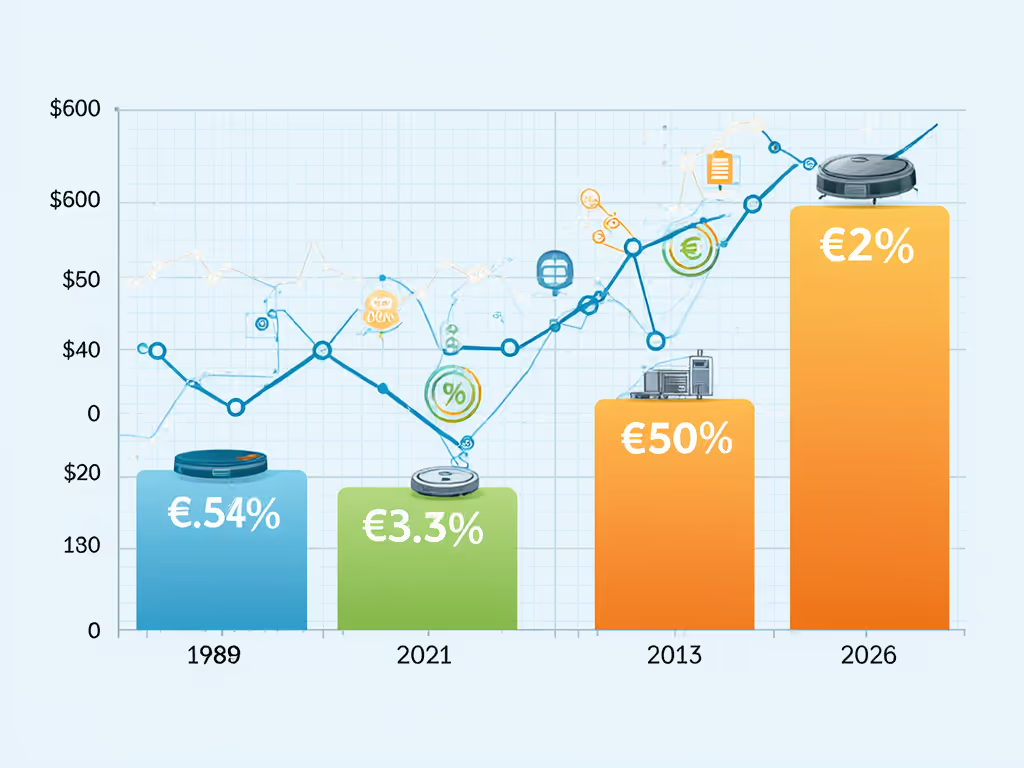
| Component | Basic Robot (3-Yr) | VLM Robot (3-Yr) | Why the Difference |
|---|---|---|---|
| Brush Replacements | 4x | 2x | Fewer tangles from avoiding debris clusters |
| Filter Costs | $45 | $30 | Less dust re-ingestion from targeted cleaning |
| Emergency Interventions | 11 hrs | 3.5 hrs | Higher accuracy = fewer stuck incidents |
| Map Resets | 9x | 2x | Stable understanding of home layout |
| Total Time Cost | 28 hrs | 10 hrs | - |
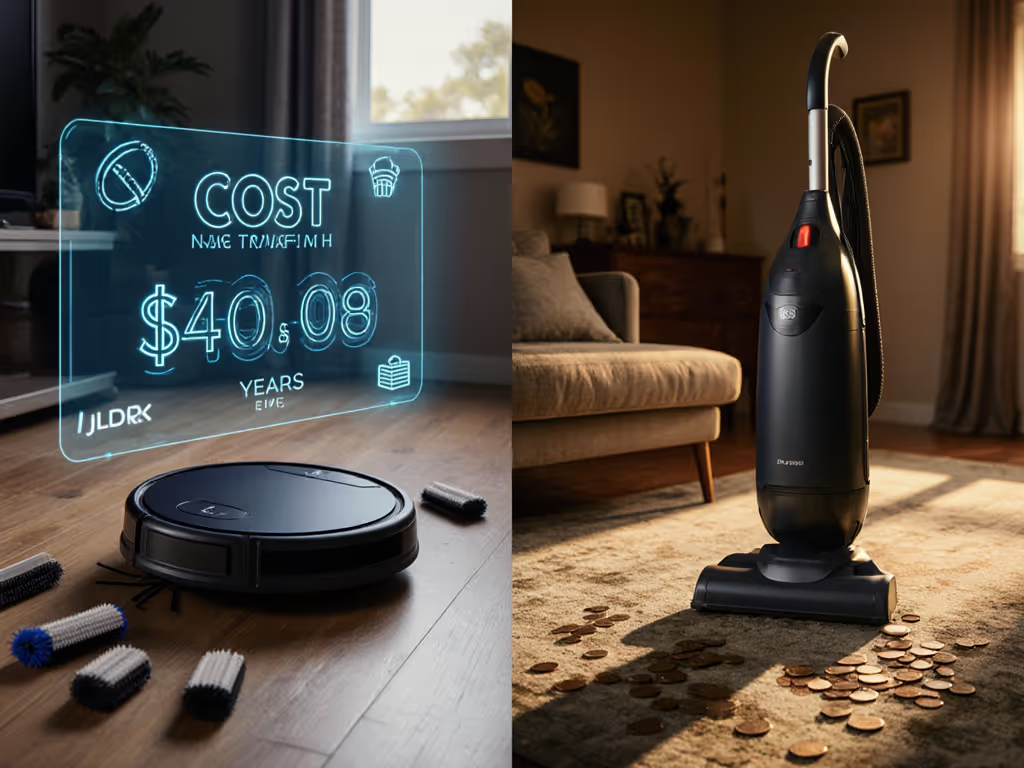
My mixed-floor apartment with a husky demonstrated this clearly. The cheaper model (advertised at $299) required weekly brush cleanings, monthly sensor wipes, and constant map resets, adding 22 hours of maintenance annually. The VLM model (MSRP $549) needed half the interventions, with only bi-monthly brush checks. By year three, the "premium" model's plain-cost summary showed a 22% lower total ownership cost despite the higher sticker price.
Predictable Schedules for Maintenance
- Battery usage adapts to cleaning demands (preserving lifespan)
- Brushes self-adjust tension based on detected debris types
- Filters report actual saturation levels rather than time-based estimates
This intelligence creates predictable schedules you can plan around. Instead of guessing when parts need replacement, your app shows exact usage metrics. For configuration tips and mapping tools, use our robot vacuum app guide. My VLM robot vacuum sends replacement notifications calibrated to my actual home conditions, not arbitrary 6-month intervals that ignore my dog's seasonal shedding.
How to Evaluate VLM Robot Vacuums for Your Specific Home
Don't fall for clever demos shot in sterile showrooms. Test these real-world scenarios before buying:
The Threshold Challenge Place the robot on a dark rug next to a light hardwood floor. A true VLM system will recognize this as a single continuous surface rather than treating the rug as an obstacle. Basic systems often get stuck here.
The Toy Test Scatter small toys (blocks, action figures) throughout your main living area. Watch whether the robot identifies them as "avoid" objects or blindly attempts to clean around them. I've seen robots with inflated "advanced recognition" claims plow through Lego towers.
The Pet Reality Check Simulate a "pet accident" with a small blob of pudding. The robot should immediately avoid it and send an alert, not create a smeared mess requiring manual cleanup. This is non-negotiable for pet owners.
Your Three-Year Checklist
- ✅ Parts availability: Confirm replacement brushes/filters are in stock with <30 day lead time
- ✅ Warranty coverage: Ensure the vision processing unit is covered for minimum 2 years
- ✅ Maintenance transparency: Does the app show actual part usage metrics or just time-based estimates?
- ✅ Map stability: Will it retain learned object recognition after firmware updates?
- ✅ Noise profile: VLM processing can increase operational noise (test during quiet hours)
Budget is a feature when you plan three years ahead. That $200 "deal" becomes a $400 headache when hidden costs and constant maintenance negate your time savings.
Final Verdict: Is VLM Technology Worth the Investment?
Yes, but only if implemented thoughtfully. Not all VLM robot vacuums deliver equal value. The technology shines brightest in homes with:
- Mixed flooring types (hardwood, tile, area rugs)
- Pets or frequent small-object clutter
- Open layouts where navigation errors compound
- Owners who value predictable maintenance over novelty
The premium models that integrate VLM with robust multi-sensor systems provide 30-40% better long-term value through reduced maintenance and fewer replacement needs. Avoid "VLM-ready" models requiring future upgrades; their half-implemented systems often create more problems than they solve.
Three-year cost index must be your deciding factor. A robot that fits your budget over time beats a cheap purchase that stalls. Calculate:
True Monthly Cost =
(Initial Price + Expected Parts + Maintenance Time Value) ÷ 36 months
When you account for actual ownership, including the hours you'd rather spend with family rather than untangling brushes, you'll find that VLM technology pays for itself in peace of mind. For homes seeking truly autonomous cleaning that adapts to real-life chaos, this is not just smart tech, it is the foundation for reliable, long-term value.

Related Articles