Robot Vacuum Navigation Paths: Optimize for Your Home Layout
By Lucas Ferreira • 15th Dec
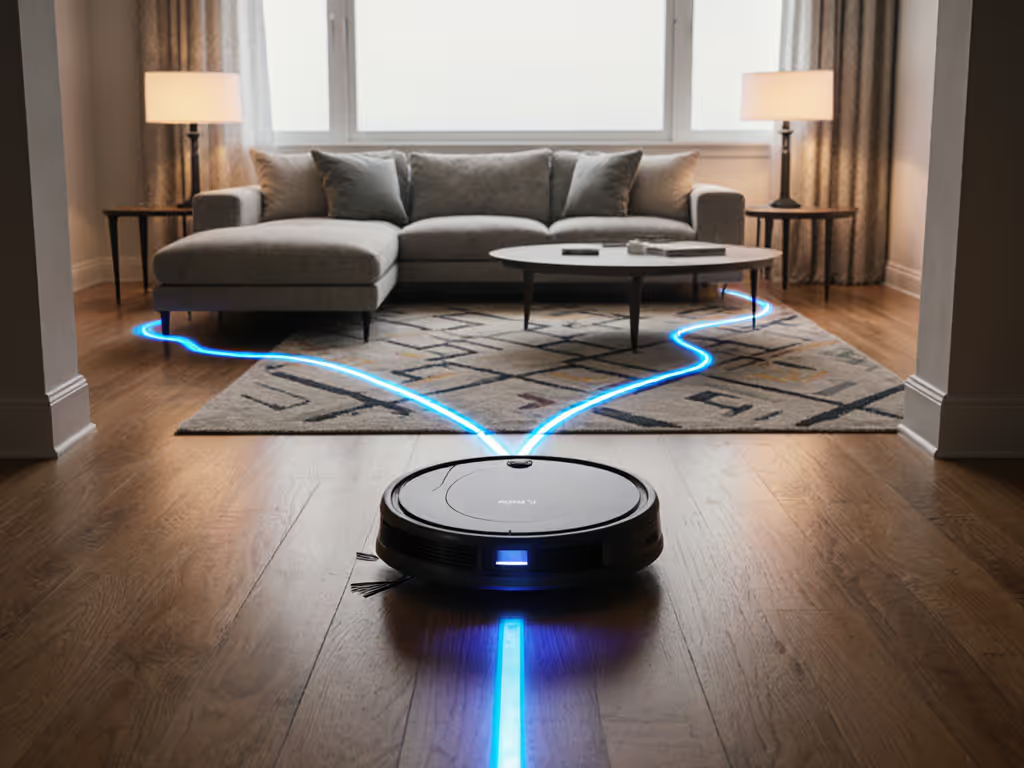
If your robot vacuum and mopping system keeps missing spots or getting stuck, it's likely fighting your home's layout, not bad hardware. Most frustrations trace back to robot vacuum navigation paths that weren't tailored to real-world obstacles like chair legs, thresholds, or mixed flooring. For step-by-step layout tweaks that improve coverage, see our home layout optimization guide. I've seen it happen: a friend's unit took three tries to map her apartment correctly because nobody verified the zones after setup. Simple setup today prevents headaches for the next thousand runs. Let's fix that.

DREAME L40 Ultra Robot Vacuum
Automated cleaning for spotless floors, less effort, and pet-friendly homes.
$399.99
Suction Power11,000Pa
Suction Power11,000Pa
Pros
Fully automated emptying, mop washing, and drying dock
Exceptional 11,000Pa suction with extendable side brush for corners
Cons
Navigation/obstacle avoidance receives mixed user reviews
Higher initial investment for advanced features
Customers find the robotic vacuum performs well on bamboo floors, effectively picking up dirt and pet hair, and leaving floors spotless. The device is remarkably user-friendly, with a self-explanatory app, and customers consider it worth the price.
Customers find the robotic vacuum performs well on bamboo floors, effectively picking up dirt and pet hair, and leaving floors spotless. The device is remarkably user-friendly, with a self-explanatory app, and customers consider it worth the price.
Why does my robot vacuum's cleaning path seem random sometimes?
Early models did move randomly, bumping into objects until they covered a room. Modern units use smarter systems:
- LiDAR: Laser mapping that works in total darkness (ideal for basements)
- vSLAM: Camera-based mapping that struggles in low light
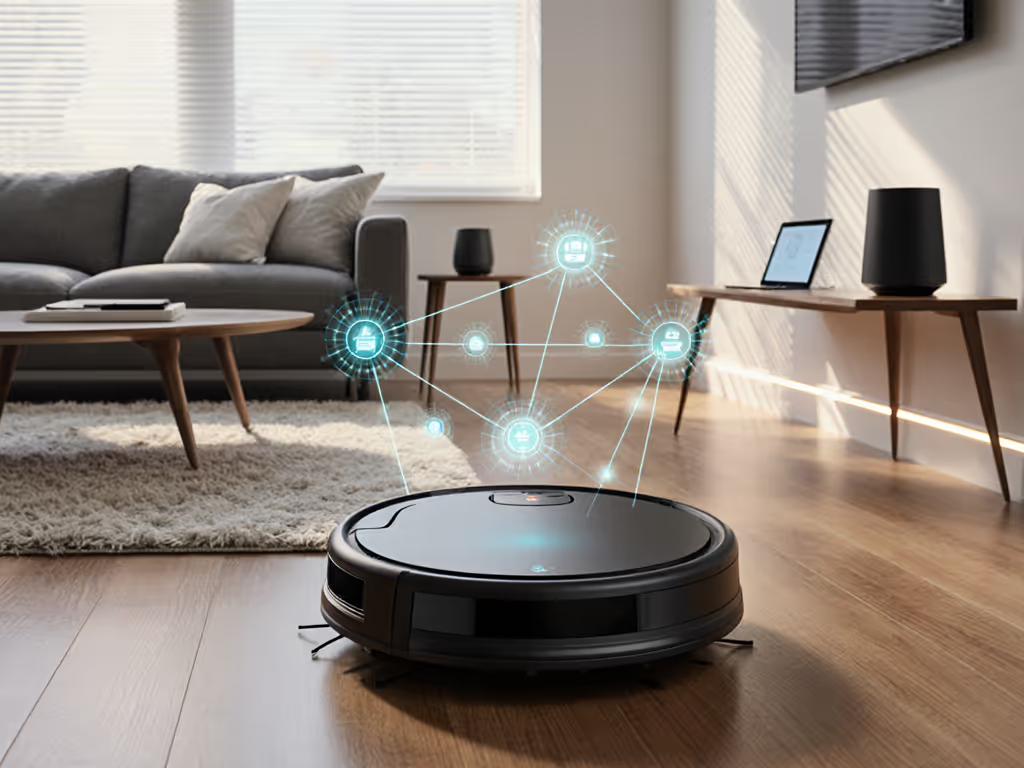
- Hybrid sensors: Combines gyroscopes, cliff detectors, and obstacle sensors
Here's what matters for your home layout: Your robot's first map determines everything. If it mislabels a hallway as 'living room', your 'kitchen-only' clean will fail. Always verify zones before setting routines. If you need help customizing rooms and no-go lines, use our robot vacuum app guide to make zoning changes that stick. A single misnamed room broke my sister's schedule for a week (until we timed the correction to her morning coffee brew cycle). Imperfect maps cause more rescues than weak suction.
What's the difference between spiral, zigzag, and edge cleaning patterns?
Each pattern solves specific problems. Matching them to your home prevents wasted time:
- Spiral cleaning pattern: Starts centered, spirals outward. Best for small rooms or spot-cleaning spills. Avoid in cluttered spaces, it misses corners.
- Zigzag cleaning pattern: Crisscrosses methodically. Ideal for open floor plans. Slows down on rugs to boost suction.
- Edge cleaning technology: Activates when sensors detect walls. Critical for baseboards. Poor implementations leave 1-inch dust strips.
Pro tip: If pet hair piles up along skirting boards, force edge mode before the main clean. Most apps let you trigger this manually. Never assume the robot will find corners automatically, especially with dark flooring that confuses optical sensors. Learn why dark floors confuse sensors and how to fix it in our dark floor sensor guide.
How do I get reliable room-by-room cleaning?
Room-by-room cleaning fails when maps misread thresholds. Follow this 5-minute checklist after your first clean:
- Check map accuracy: Zoom in on doorways. Does the robot recognize your hallway as a separate zone?
- Rename zones immediately: Don't trust auto-labels like 'Zone 3'. Call it 'Kitchen' or 'Pet Area'.
- Verify threshold navigation: Place a thin rug (like a bath mat) at a doorway. Does it cross without pausing?
- Test edge paths: Watch the second pass. Does it hug walls or veer 6 inches away?
- Re-run after furniture moves: Remap within 24 hours of rearranging.
Fix the snag, not the schedule. A 60-second map tweak saves daily babysitting.
Why does my vacuum get stuck on transitions between rooms?
Thresholds between hard floors and rugs trip 70% of units (per 2024 Consumer Home Robotics Report). For gear and setup advice that reliably clears door strips, see our seamless floor transitions guide. Solutions:
- For low-pile rugs: Increase wheel traction by wiping tires with rubbing alcohol
- For high thresholds: Place a rubber doorstop ramp temporarily during mapping
- For dark rugs: Cover with light-colored paper during initial mapping (remove after)
Never skip this: Run a dry mop cycle over thresholds before activating robot vacuum and mopping. Wet edges make carpets slippery for wheels. A Dreame L40 Ultra user I coached resolved stair-landing jams this way, and its 3D structured light sensors now glide over 0.8-inch rises.
What's the simplest navigation setup for pet owners?
Skip complex multi-floor maps if you're new. Pets create moving obstacles that confuse even advanced systems. If clutter or pet toys are common, compare models with top-tier smart obstacle avoidance to reduce rescues. Do this instead:
- Start single-floor: Map only where pets spend time (e.g., main level)
- Set 'pet zones': Mark food/water areas as no-go zones immediately
- Use short zigzag cycles: 20-minute cleans twice daily > marathon sessions
- Avoid dark flooring: Roborock's 2025 field data shows 23% more navigation errors on charcoal tiles
Prioritize units with physical cliff sensors over camera-only systems. When my niece's puppy left an 'accident', the LiDAR-based unit detected the texture change and rerouted, while her friend's camera model smeared it across three rooms.
Your Actionable Next Step
Today: Run a single-floor mapping cycle during daytime. Note where the robot hesitates at doorways. Then:
- Open your app's map editor
- Drag mislabeled zones into correct rooms
- Draw no-go lines 12 inches from pet beds
- Schedule one 'edge clean only' cycle tonight
This takes less time than loading the dishwasher. When you wake up, your bot will know exactly where to clean, without babysitting. Simple setup today prevents headaches for the next thousand runs. Now go fix the snag, not the schedule.
Related Articles