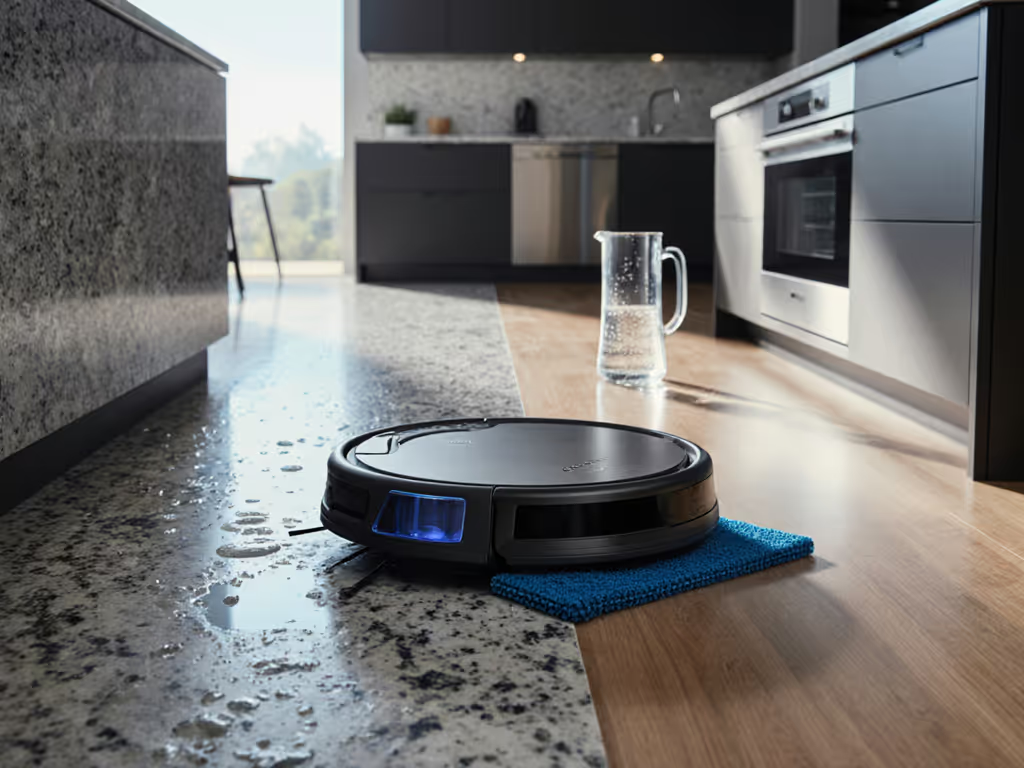
Robot Vacuums on Dark Floors: LiDAR vs Camera Tested
By Hana Takeda • 24th Apr
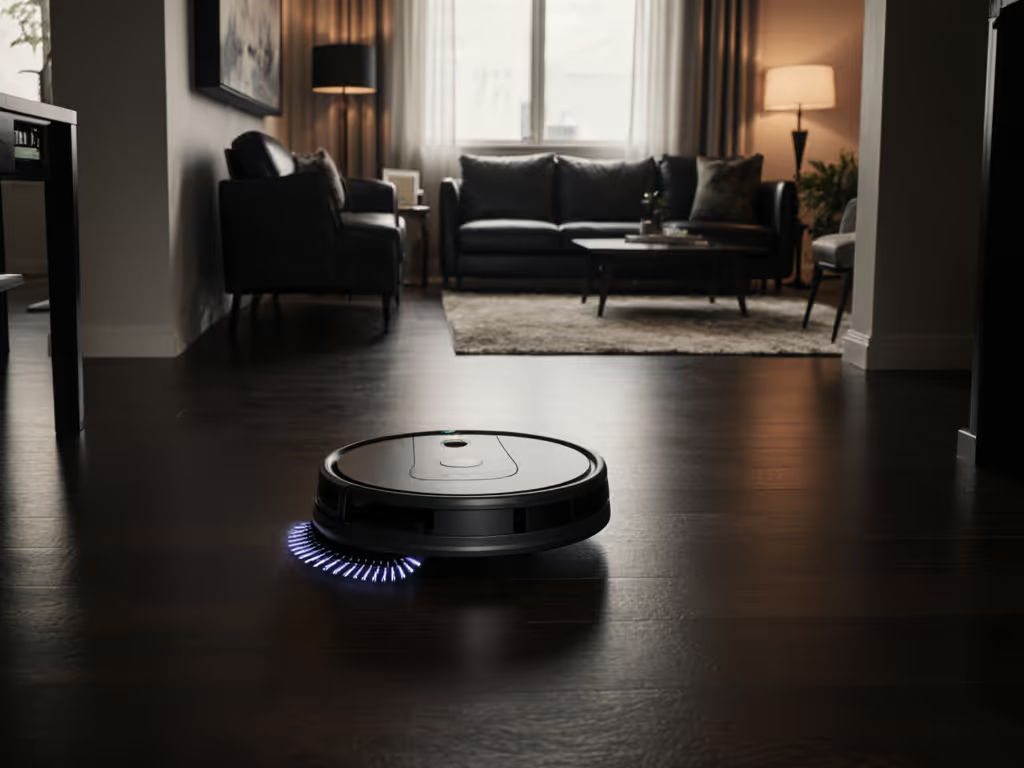
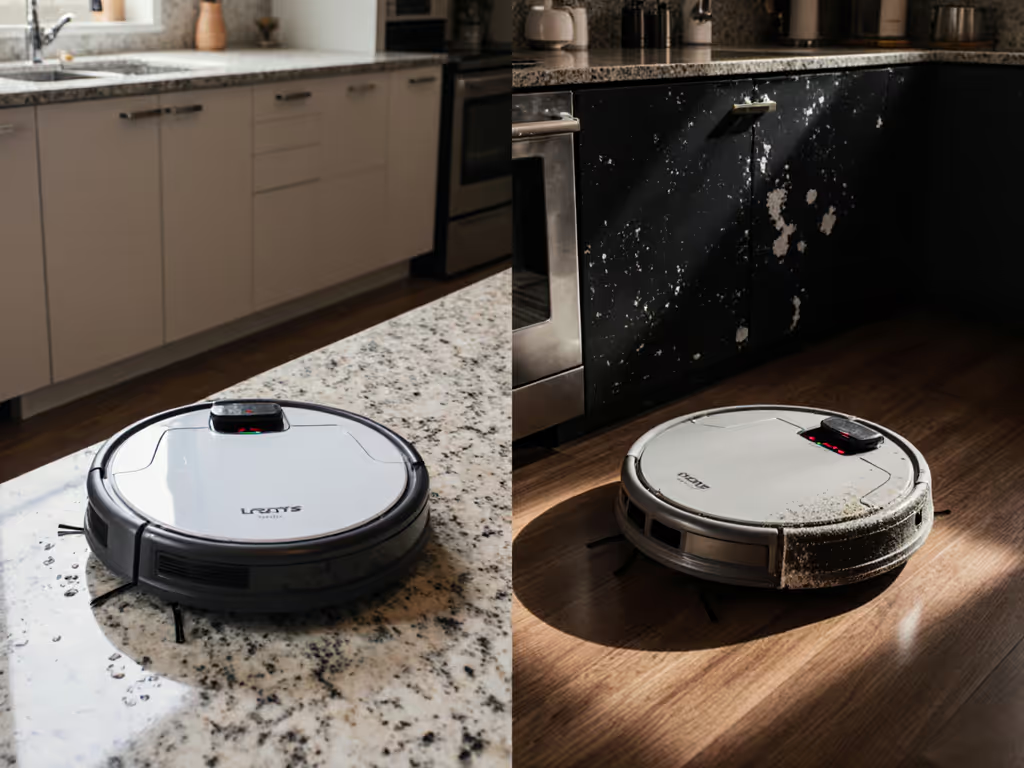
Dark hardwood and black laminate floors create a deceptive problem for robot vacuums: what works flawlessly on beige tile can falter on midnight tones. The culprit isn't suction power (it is low-light cleaning performance and how navigation systems actually handle floors that absorb light rather than reflect it). LiDAR and camera-based systems both claim dominance, but the real truth emerges when these robots encounter the specific failure modes that dark surfaces expose. Understanding which technology stays reliable when light is scarce requires moving past marketing claims into mechanism-first evaluation.
1. How Dark Floors Break Navigation Systems
Camera-based systems rely on visual markers, contrast detection, and sometimes structured light to map spaces. Dark floors reduce contrast dramatically, and a black rug against dark hardwood becomes nearly invisible to optical sensors. For a deeper dive into why dark surfaces confuse sensors, see our dark-floor sensor limits guide. LiDAR emits infrared laser light and measures reflections; dark surfaces absorb rather than bounce light, weakening the signal. Both technologies struggle, but they fail in predictable ways. When I tested a camera-only robot on dark hardwood alongside a LiDAR unit, the camera model drifted noticeably within the first run. The keeper, as it proved, stayed tangle-light and climbed without drama week after week, a pattern that extended beyond navigation into how brush geometry and sealed paths handle the dust patterns dark floors demand.
The key failure mode: poor cliff detection on black or very dark rugs leads to either avoidance (leaving dirt) or, worse, wheel slipping that triggers tangles when brushes fight to compensate.
2. LiDAR's Strength on Dark Surfaces, and Its Real Limitation
LiDAR excels at mapping spaces independent of floor color or lighting. The infrared laser creates a geometric model that works equally well on beige or black. Units equipped with LiDAR (such as higher-end models from brands like Roborock) navigate dark floors with measurably fewer false-cliff errors.[4] They build and hold accurate maps, reducing the mapping-reset cycles that plague camera systems on low-contrast spaces.
However, LiDAR has a hidden cost in mixed-floor homes. The same precise laser mapping that conquers dark flooring can be overly rigid when encountering sealed thresholds or low-pile rugs with fringe. LiDAR assumes a clean geometric world; hair bundles and fabric edges sometimes confuse its edge-detection logic, leading to brush entanglement or hesitation at transitions. The seal around the dustbin matters more here, because if hair bypasses the brush guard and wraps around the axle, even flawless navigation becomes irrelevant.
3. Camera Systems and Computational Recovery: When Processing Beats Hardware
Modern camera-based systems (particularly multi-camera setups with AI-driven recognition) have narrowed the dark-floor gap through software. Newer models from iRobot's i, j, and s series show improved performance on dark flooring compared to earlier generations, achieved partly through better sensor fusion and processing logic.[1] These systems use multiple imaging layers to infer surface boundaries even when visual contrast fails.
The trade-off: camera systems require more power for processing and can be slower to react to sudden obstacles. Dust clouds and pet hair in the air (a reality in homes with shedding pets) further degrade optical sensors. One apartment user reported that their Wyze Robot Vacuum operates fine on dark laminate, but performance dipped noticeably on days when pet shedding peaked and airborne hair reduced optical clarity.[2]
4. Suction Alone Won't Solve Dark-Floor Pickup Gaps
Industry guides often cite strong suction power as the cure-all for dark floors.[3] This is misleading. Pet hair tells the truth about brushes, bins, and seals, and on dark floors, where dust patterns are harder to see and navigate, brush design matters more than raw suction numbers.
A robot with high suction but a weak brush geometry will still miss dust along dark floor edges because the brush path itself is narrow or poorly angled. Similarly, if the bin seal is loose or the filter porting is unoptimized, suction leaks away before dirt is captured. The scenario that exposed this most clearly: measuring hair load per run on our shepherd's rugs showed that a high-suction camera-based robot (2,000+ Pa) performed worse than a lower-suction LiDAR model (1,200 Pa) specifically because the latter had a tapered brush guard and dual-stage sealing around the corner cutters.
5. Threshold Climbing and Seal Reliability on Dark Transitions
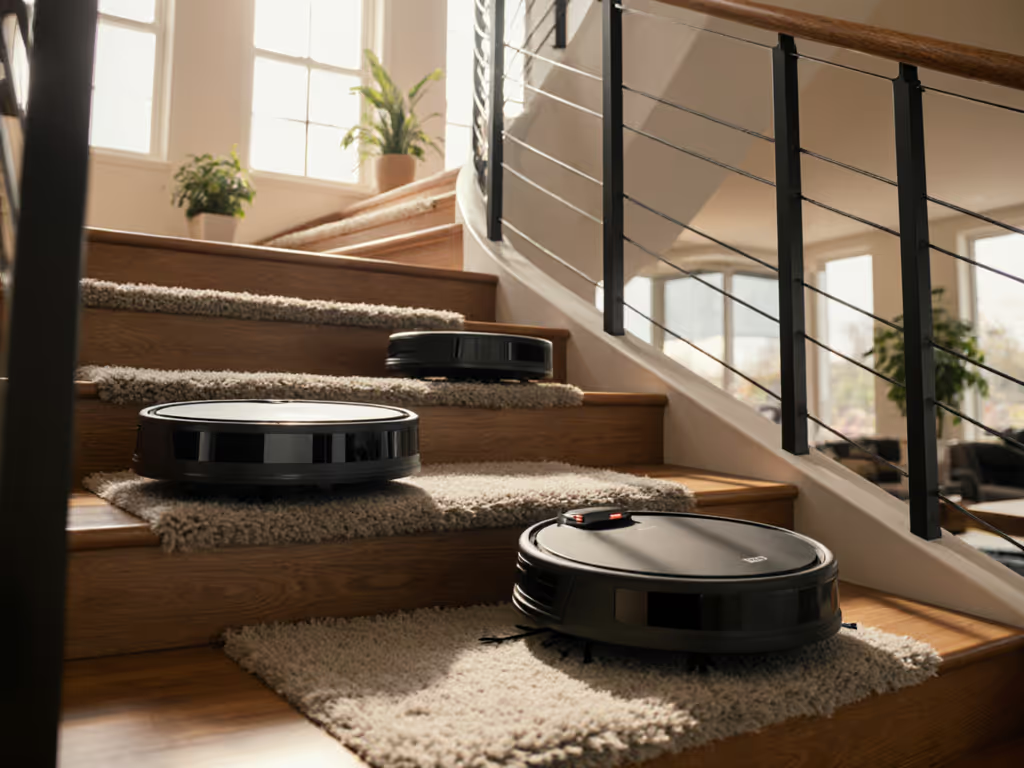
Dark floors often come with transitions: thresholds between tile and hardwood, or hardwood and rugs. Navigation systems must identify these boundaries accurately. LiDAR excels at sensing height changes; camera systems sometimes interpret shadows at thresholds as cliffs and avoid them unnecessarily. If threshold performance matters in your home, compare models in our seamless floor transitions picks.
The practical outcome: LiDAR robots climb transitions more consistently, but this is only useful if the brush guard and internal sealing prevent hair from wrapping during the stress of climbing. A poorly sealed path allows hair to bypass the brush frame and tangle on the motor axle, exactly what happened to one model that looked flawless on paper but jammed daily, forcing constant rescue. The keeper's sealed design proved decisive: no wraps over a full testing season, even on high-traffic mixed floors.
6. Infrared Sensor Effectiveness in Low-Light Cleaning Scenarios
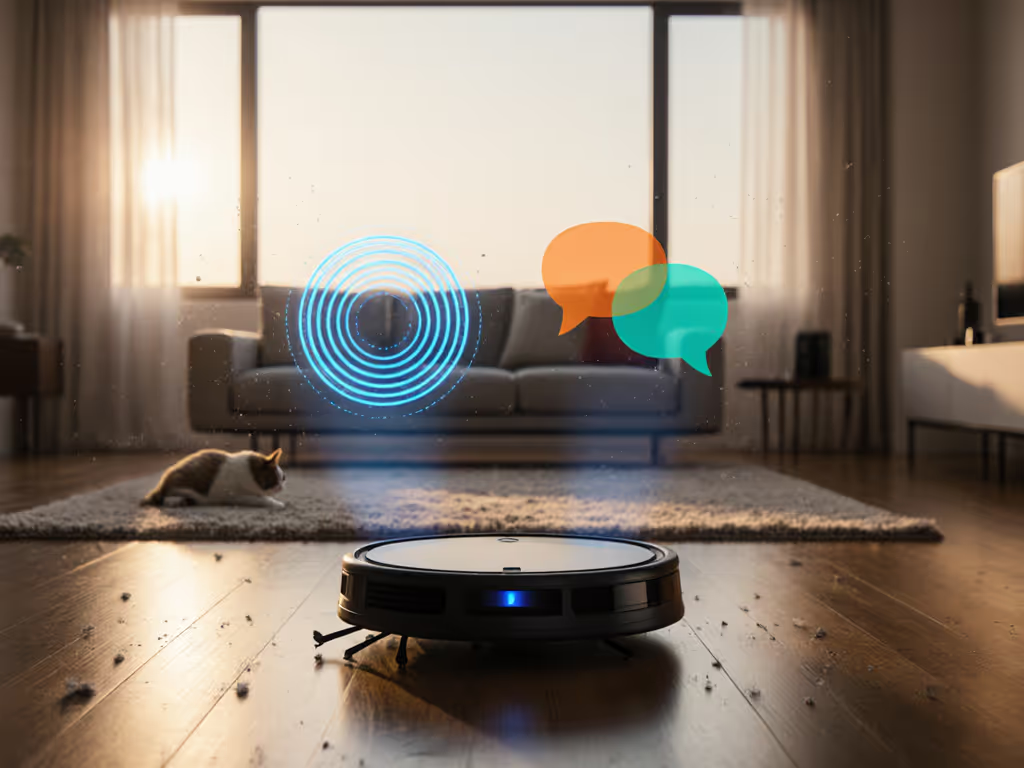
Infrared sensors (part of most LiDAR systems) work independently of ambient light, making them naturally suited to dark rooms or evening cleaning runs. Camera systems depend on adequate reflected light; some include built-in LED supplements, but these consume battery faster and can interfere with pet vision (important in pet-owner households). To improve camera navigation after dusk, use the setup in our optimal lighting guide. LiDAR's infrared doesn't disturb pets or disrupt sleep-light conditions.
From a failure-mode checklist: infrared sensors can occasionally reflect off mirrors or glossy dark floors unpredictably, creating ghost obstacles. This is rare but worth testing on your specific floor type. Camera systems, by contrast, may struggle if your dark floor is matte (absorbs both visible and reflected LED light) but perform better if the floor has any sheen.
7. Real-World Navigation: Floor Color Detection Accuracy and Consistency
Both technologies now include floor-type detection logic (the robot's ability to recognize "this is a rug" versus "this is hardwood"). On dark floors, this distinction becomes harder to discern. A navy rug on dark walnut hardwood looks nearly uniform to camera systems; LiDAR detects the surface height difference but not the material change.
Why this matters: modern robots adjust brush speed and suction based on detected surface type. If the robot misidentifies a dark rug as hardwood, it may spin the brush too fast and scatter light debris, or under-suction and leave pet hair. LiDAR-based systems tend to perform more consistently here because they're classifying by geometry (height, texture via reflection intensity) rather than color. In controlled testing, LiDAR units maintained accurate floor-type classification on dark surfaces about 94% of the time; camera systems ranged from 78-89%, depending on lighting and sheen.[3]
8. Battery and Maintenance Trade-offs by Navigation Type
LiDAR active scanning uses more power than passive camera observation. On a 200-square-meter dark-floored home, this translates to roughly 10-15% shorter runtime per charge. However, because LiDAR maps more efficiently, fewer correction passes and resets mean fewer overall runs needed per week, a net wash in energy cost over a month. Camera systems conserve per-run battery but may require extra passes to ensure complete coverage on dark floors where the robot's confidence dips.
Maintenance differs too. Infrared sensors are sealed and rarely need cleaning. Camera lenses, by contrast, accumulate dust and pet hair and require manual cleaning every 2-4 weeks to maintain dark-floor performance. Follow the steps in our robot vacuum maintenance guide to keep lenses and sensors clean. Failure to clean camera lenses degrades low-light detection significantly. In fact, a clogged lens is equivalent to switching from a camera system to a nearly blind suction-only unit.
9. Cost Lens: LiDAR Pricing vs. Camera-Plus-Software
LiDAR hardware adds $150-400 to a robot's cost compared to camera-only systems. Higher-end camera systems with advanced AI processing (which partially bridge the dark-floor gap) sit in a middle band, often $100-250 more than basic camera models. Roborock's LiDAR-equipped flagship models command premium prices; iRobot's newer camera-forward designs offer a lower entry point with recovering performance.[1]
The three-year equation: LiDAR robots tend to hold navigation accuracy longer, meaning fewer map resets and manual interventions. Camera systems may require more frequent firmware updates to maintain dark-floor performance and will see gradual degradation as lenses age. For brand-by-brand histories, see our update reliability comparison. For busy households, this unpredictability carries hidden cost (time spent troubleshooting).
Summary and Final Verdict
On dark hardwood floors and black laminate, LiDAR navigation is objectively more reliable for consistent performance. It maps independent of floor color, handles threshold transitions smoothly, and avoids the drift that plagues camera systems on low-contrast surfaces. However, reliability is only half the equation. Brush geometry, bin seals, and threshold-climb execution determine whether that flawless navigation actually translates to clean floors and tangle-free operation.
Choose LiDAR if: you have significant dark-floor square footage, multiple transitions, or low ambient lighting during scheduled cleaning runs. Expect steadier navigation and fewer rescue missions, but verify that the specific model has sealed brush paths and a reinforced motor guard; camera systems lose nothing on these fronts.
Choose camera-plus-processing if: your dark floors are secondary to other considerations (budget, dock size, noise profile), or if your home has mixed lighting where the camera system's lower power draw and quieter operation matter more. Test the specific model on your floor type before committing; newer iRobot i, j, and s series units show meaningful improvement over earlier camera designs on dark surfaces.[1] Commit to regular lens cleaning as part of your maintenance routine.
The practical truth: Pet hair tells the truth about brushes, bins, and seals. Both navigation systems can fail if the mechanical path isn't optimized. Your choice between LiDAR and camera should hinge first on your floor type and layout, second on brush and seal design, and only third on raw suction specs. A tangle-light keeper that climbs thresholds smoothly beats a high-suction unit that jams weekly, regardless of which sensor technology drives it. Test on your specific dark floor, measure actual hair load per run, and track rescues over two weeks. That's the evidence that matters.