Stair-Climbing Robot Vacuums: Tested for Real Homes
By Aisha Noor • 19th Mar
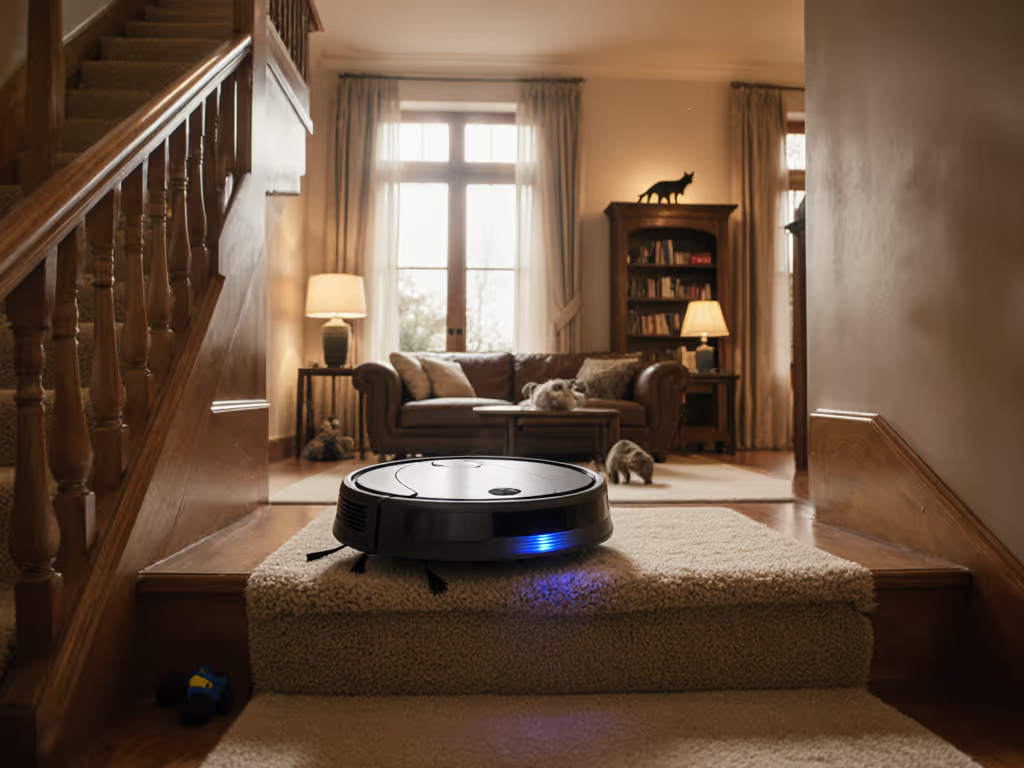
For years, the stair climbing robot vacuum remained the unreachable fantasy of multi-floor households. You'd invest in the latest flagship model, watch it glide across your open living room with apparent purpose, then watch it halt at the bottom stair, utterly and irrevocably stuck. The robot vacuum cleaner industry had conquered carpets and hard floors, but not vertical mobility systems. Until now. CES 2026 brought two fundamentally different answers to the stair problem: the Roborock Saros Rover and the Dreame Cyber X. Both promise to solve one of the most stubborn pain points in smart home cleaning. Neither is perfect. Both demand the kind of practical scrutiny that separates marketing from livable reality. For a deeper look at how current designs compare on stairs, see our stair-climbing comparison.
The Problem: Multi-Floor Homes Remain Fractured
The math of owning a robot vacuum cleaner in a multi-story home has always felt incomplete. A single unit covers your ground floor flawlessly. But those stairs? They become a dead zone. You can either accept the gap (mentally budgeting a weekend afternoon to vacuum your staircase by hand) or double your investment by placing a second robot on the upper floor. Neither feels like progress. Both feel like admitting that automation, for all its sophistication, stops where flat floors end.
Stairs sit at the fault line of home design. They're not obstacles in the way a threshold or rug fringe is; they're an architectural fact. Families with young children, pet owners managing shedding across multiple levels, and remote workers who schedule calls across different zones of their homes all confront the same truth: step navigation technology has lagged decades behind the promise of the smart home.
The Agitation: Competing Solutions, Competing Trade-Offs
When competing manufacturers finally tackled stair climbing, they reached for fundamentally different engineering paths. This divergence is not incidental, it reveals deeper choices about what "solving stairs" actually means, and who pays the price for those choices.
The Dreame Cyber X arrived first, debuting in December 2025 at IFA Berlin.[1] It approaches stair climbing with a tracked base that physically separates from the vacuum unit itself.[1] The vacuum detaches to clean your floor; the tracked exoskeleton handles vertical transit. The speed advantage is real: the Cyber X climbs stairs considerably faster than its competitor.[1] But here's the core trade-off: the Cyber X climbs stairs but cannot clean them as it ascends.[1] Your staircase remains a gap in the automation cycle. Moreover, the tracked base adds bulk, and netizens flagged concerns about whether prolonged use would scratch or wear stair edges.[1] For multi-floor homes, one unit becomes expensive fast, while equipping each floor with separate robots offers higher efficiency at nearly the same cost.[1]
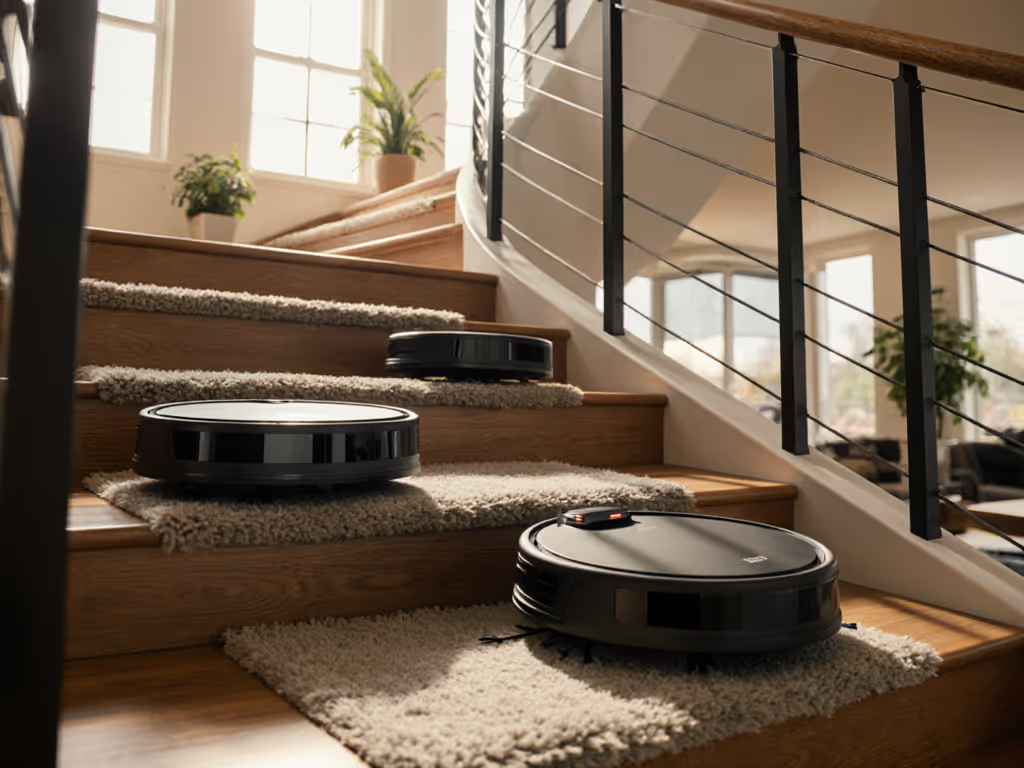
The Roborock Saros Rover entered the arena at CES 2026 as a fundamentally different machine.[2][3] Instead of separable components, it uses independent robotic legs with wheels that maintain front-to-back balance while the vacuum actively cleans each stair tread.[1][2][3] In demonstration, it detected stairs intelligently, cleaned step by step, and climbed to the next level.[3] The engineering is closer to what home dwellers have actually fantasized about: automated stair cleaning that doesn't require manual intervention or fragmented workflows.
Yet the Saros Rover carries its own gravity of concerns. Stability remains unresolved in real-world conditions.[1] The robot must maintain balance while carrying varying water loads in its tank and onboard dirt; drift occurs, and balance failures on stairs carry genuine consequences.[1] Videos from CES showed tipping incidents.[1] Stair-climbing speed lags notably behind the Cyber X.[1] Battery capacity and efficiency need significant improvement to sustain cleaning on upper floors after the energy cost of vertical transit.[1] To estimate whether a model can clean upstairs after climbing, check our battery life tests. The Rover remains in development with no confirmed release date.[1]
The Solution: Vertical Mobility Systems Reimagined
Both robots represent genuine stair safety mechanisms and step navigation technology advancements. Neither is production-ready in the sense of "buy today and trust tomorrow." But understanding their design philosophy clarifies which trade-offs align with your home's actual rhythm.
The Roborock Saros Rover: Cleaning as You Climb
The Saros Rover embodies the "clean as you go" principle.[1][2][3] Its two wheeled legs move independently, allowing the vacuum body to stay level while traversing uneven surfaces and stairs.[1][2] This matters because it means your stair treads receive the same suction and cleaning attention your floor does.[2][3] For engineering details on wheel‑leg stair systems and hardwood safety, read our wheel‑leg stair safety. For homes where pet hair accumulates on stairs, where dust settles on every horizontal surface, or where visible grime bothers you between deep cleans, this is the design that aligns with the outcome you want: comprehensive coverage, not partial automation.[2]
The power requirement is substantial. The Saros Rover demonstrated impressive suction during live demos.[3] But this raises the real question: can a robot maintain that suction while climbing, and still have enough battery reserve to clean your upper floors?[1] The engineering answer isn't finalized. This is why the Rover remains in development, not because the concept fails, but because the margin between "works on the show floor" and "works on a Tuesday morning after you've showered" is where reliability lives.[1]
For households with young children or pets, there's a secondary value in the Rover's approach: fewer separate cleaning tasks fragmenting your day. Multi-floor cleaning efficiency improves when your robot completes stairs and upper floors without requiring mode switches, manual dock relocation, or unit reassignment.
The Dreame Cyber X: Speed Over Integration
The Cyber X prioritizes vertical velocity and proven mechanics.[1] Its tracked base is borrowed from industrial robotics (a design philosophy that favors predictable, proven performance over integration elegance).[1] This is not weakness; it's a choice. The Cyber X climbs stairs much faster than the Saros Rover.[1]
The limitation is categorical: it does not clean stairs.[1] Your staircase remains a manual cleaning gap or a separate robot's responsibility. For some homes, this is tolerable. Single-story apartments, townhomes where upper floors are bedrooms only and see less traffic, or homes where stair cleanliness is a weekly-deep-clean priority (not a daily wear issue) may find the speed advantage sufficient.[1]
The durability concern around track wear on stair edges is worth taking seriously.[1] If you plan multi-year ownership, and tight spiral stairs or delicate edge treads matter to your home's longevity, this is a specification you'd want to stress-test directly.
What Real Homes Actually Need
Neither robot solves the complete stair problem yet. But they reveal what "solving it" requires: honest trade-offs between coverage and complexity, speed and thoroughness, proven mechanics and integrated innovation.
The question isn't "which robot is objectively better?" The question is whether your home's rhythm prioritizes quiet floors that beat clever features when naps and meetings collide.[1][2][3] If you work from home and your children nap on upper floors while you take calls downstairs, stair-climbing noise becomes part of your decision calculus. Neither manufacturer has published detailed decibel breakdowns for stair-climbing operations. Our lab-measured robot vacuum noise scores offer a baseline for judging climbing-mode noise. This is a gap you'd want filled before purchase. The ambient noise of a robot climbing stairs differs sharply from rolling on flat floors; the pitch, the strain on motors, the feedback from treads (these are lived experiences that specs don't capture). You'd want to hear it in a space similar to your own before committing.
Privacy, too, sits in this gap. Neither the Saros Rover nor the Cyber X has published transparent data-handling practices specific to stair-climbing modes. Mapping multi-floor homes creates more granular location data. For concrete steps to protect your maps and streams, see our data security guide. If that data lives in the cloud, if your floor-by-floor movement patterns feed into usage analytics, if offline functionality is limited: these are questions the manufacturers should answer clearly. Respectful robotics means map once, glide often without surrendering visibility into where that map lives.
The 3-Year Cost Reality
Both robots will arrive at premium pricing: $1,500 to $2,000+ based on feature density and stair-specific engineering complexity. That cost compounds across years. Battery replacement (year 2-3), brush and filter replacements, potential motor repairs after climbing load, and extended self-emptying bag costs become visible only in ownership. Ask the manufacturers for transparent replacement schedules and costs before purchase. Multi-floor automation shouldn't become a subscription to hidden maintenance.
The Practical Scenario
Consider a real example: a suburban family with two stories, a mix of hardwood and medium-pile carpet, two pets, and schedules that overlap morning calls and afternoon toddler naps. This home needs quiet operation during call windows (7–9 AM), reliable obstacle avoidance around pet toys and dropped items, and genuinely clean stairs because pets track mud and hair on every tread.
For this home, the Saros Rover's integrated cleaning-plus-climbing appeals. But the stability concerns and unconfirmed battery performance would warrant a direct rental or extended trial before purchase (not a pre-order). The Cyber X's speed and proven tracking mechanics offer confidence, but the stair-cleaning gap means stairs still require manual work or a second unit. Neither is a "set and forget" solution.
This is the honest truth stair-climbing robots haven't yet earned: they're solving part of a multi-part problem, and they're doing it with incomplete real-world data.
What Comes Next
Both robots point toward a future where home layout (including vertical layout) no longer fragments cleaning automation. That's worth pursuing. But pursuit requires patience and skepticism in equal measure.
If you're considering a stair-climbing robot for 2026 or beyond, prioritize direct testing in environments similar to your own. Request decibel measurements and climbing-mode noise profiles. Ask for transparent data practices and privacy controls. Understand the 3-year ownership cost, including battery and component replacements. And crucially: don't let marketing momentum override the lived experience of naps, calls, and routines that these robots must fit into without disruption.
The stair problem remains unsolved until it's solved for your specific home. Continue exploring the latest real-world reviews and user feedback as both the Saros Rover and Cyber X move closer to production. Watch for expanded decibel testing, long-term durability reports, and honest accounts from early adopters in homes like yours. The best robot is the one you barely notice: in sound, in data handling, and in the seamless way it fits your days. These two are taking steps in that direction. They're not quite there yet.
Related Articles