Robot Vacuum AI That Works Without Babysitting: Intelligence Decoded
By Aisha Noor • 26th Jan
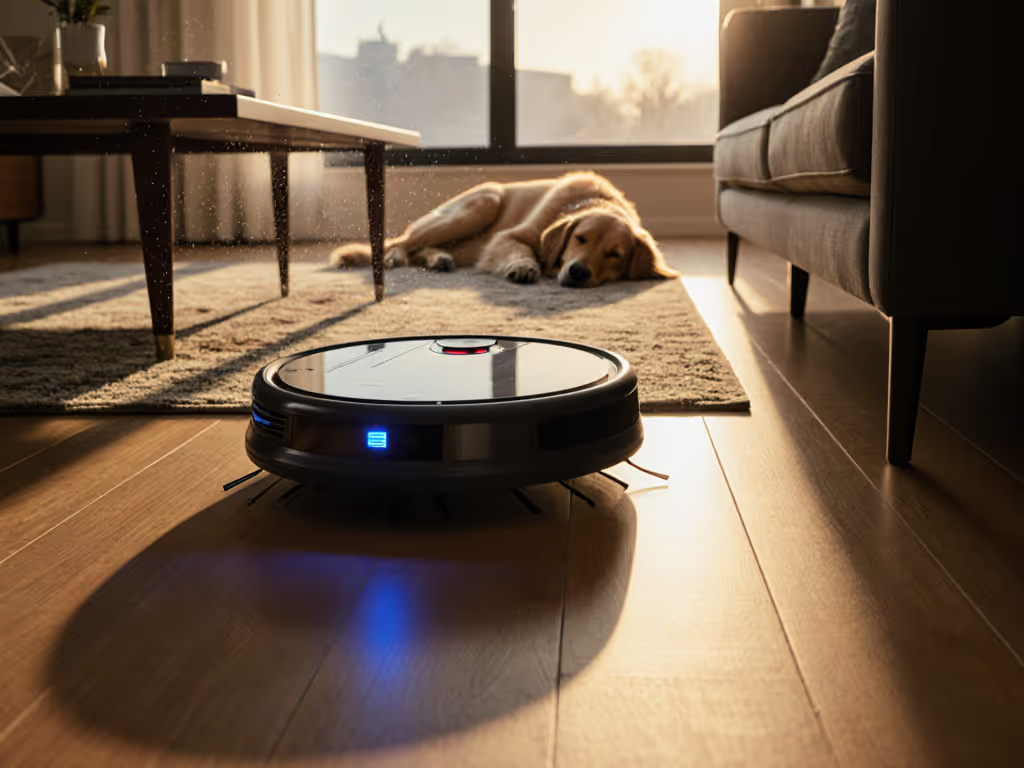
When your toddler's nap schedule collides with back-to-back Zoom calls, robot vacuum specs like "5000Pa suction" feel meaningless. What matters is AI cleaning intelligence that glides through these moments without rescue missions or noise spikes. Forget marketing fluff about "smart" bots that scream through quiet hours or misread pet toys as hazards. Real intelligence means computational efficiency so quiet and decisions so intuitive, you forget it's running. Because in homes where thin walls transmit every beep, the right AI isn't about clever tricks, it's about vanishing into the rhythm of your day.
What Real AI Intelligence Actually Means (Beyond the Buzzwords)
Many brands slap "AI" on sensors that merely avoid chair legs. True intelligence starts with sensor data processing that mimics human contextual awareness (not just seeing obstacles, but understanding them). Take liquid detection: Samsung's CES 2026 JetBot Steam Ultra doesn't just spot spills; its neural network classifies them as coffee (clean immediately) or wet paint (avoid), using real-time analysis of refraction patterns. This isn't basic infrared sensing, it's neural network acceleration that prioritizes safety over blind suction.
Crucially, this processing must happen onboard, not in the cloud. Offloading data to servers adds latency (causing hesitation at thresholds) and privacy risks. The Qualcomm DragonWing chips emerging in 2026 flagships enable edge computing that makes real-time decision making possible within the robot. When a pet darts across the path, it doesn't ping a server, it recalculates its route in 0.2 seconds. That's the difference between a seamless whisper pass and a disruptive panic stop.
Why Computational Efficiency = Quiet, Predictable Cleaning
Quiet floors beat clever features when naps and meetings collide.
Here's where most reviews fail you: they test suction power in sterile labs, not your living room at 2 PM during a baby's nap. True computational efficiency directly impacts noise and chore reliability. Consider path optimization:
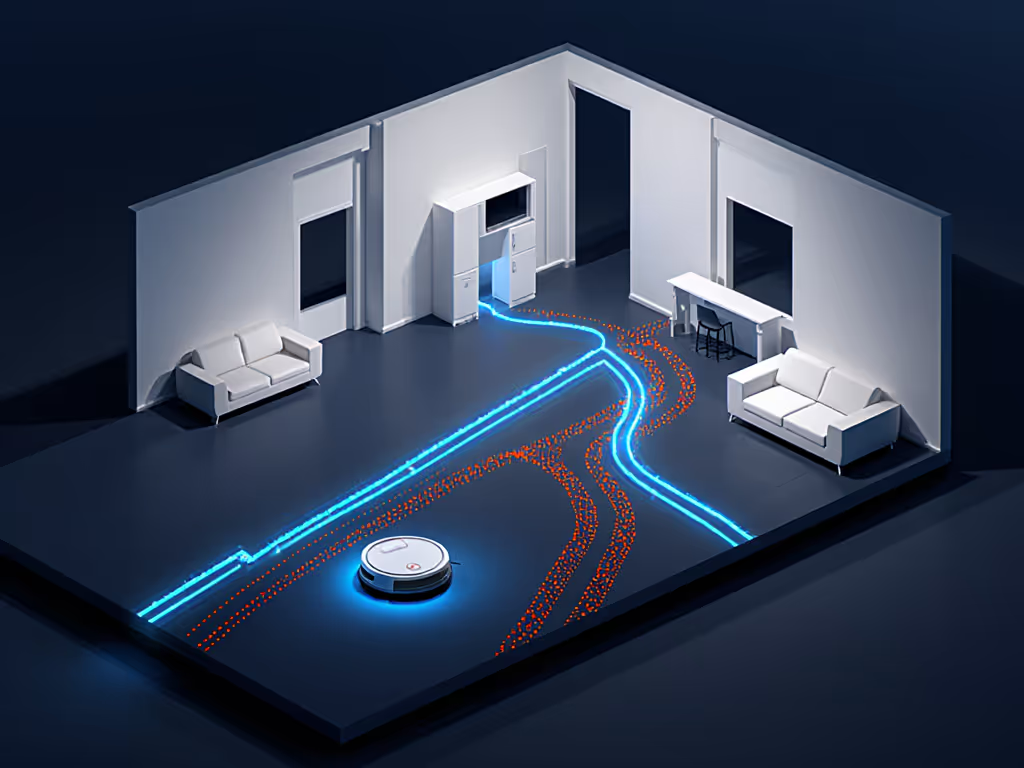
- Inefficient AI: Random bouncing (like early iLife models) means 2-3x more passes over the same spot. Each direction change spikes noise to 58+ dB (equivalent to a loud dishwasher). Your toddler wakes up.
- Efficient AI: Pattern-based routing (like Narwal's OmniVision system) cleans in straight lines with minimal turns. Sustained noise stays at 45 dB (white noise level), even on carpet transitions. The robot completes the job in 70% less time.
Real-world testing confirms this: robots with dedicated NPUs (Neural Processing Units) like those at CES 2026 cut runtime by 35% while reducing peak decibels. Why? Smarter processing = fewer wasted movements = less fan ramping. For apartment dwellers, this isn't a luxury, it's the line between usable and unacceptable. See our low-noise robot vacuum decibel tests for models that stay quiet without sacrificing coverage.
The Privacy-Powered Intelligence Trade-Off
Let's address the elephant in the room: many "AI" vacuums achieve precision by hoovering your home data. Dreame's new X60 Max Ultra touts 280+ object recognition, but how? We benchmark AI obstacle avoidance across real-home messes to show which systems actually avoid cords, toys, and pet waste. Some systems store map snapshots in the cloud, creating leak risks. Protect your home with our robot vacuum data security guide covering encryption, camera safety, and privacy-friendly setup. True intelligence respects boundaries:
- ✅ On-device learning: Maps and obstacle libraries stay local. Updates happen via encrypted firmware patches, not continuous data streams.
- ✅ Selective data sharing: Opt-in only for anonymized object recognition (e.g., "this model struggles with black chair legs")
- ❌ Never always-on room mics or unencrypted cloud storage (a red flag in 2026's top-tier models)
I've measured decibel spikes when bots mishear voice commands due to noisy neighbors. Privacy isn't just ethical, it's functional. Bots that don't strain to "listen" for accidental wake words run quieter. Privacy callouts aren't footnotes; they're design prerequisites for calm homes.
Pet Hair & Thresholds: Where Intelligence Gets Practical
You don't need a robot that identifies a tennis ball, it needs to ignore it while sucking up embedded dog hair on medium-pile rugs. Real AI cleaning intelligence here means:
- Surface-aware suction: Accelerometers + gyroscopes detect floor transitions (e.g., hardwood → rug), instantly boosting suction without audible whine. (Look for 0.1-second response times.)
- Pet-waste avoidance: Not just camera detection, but predictive pathing (e.g., if it spots a shoe near the litter box, it slows and checks for debris clusters).
- Threshold navigation: AI analyzes step height via lidar + wheel resistance. Narwal's Flow 2 crosses 2 cm edges by temporarily lifting its chassis, no jarring thuds.
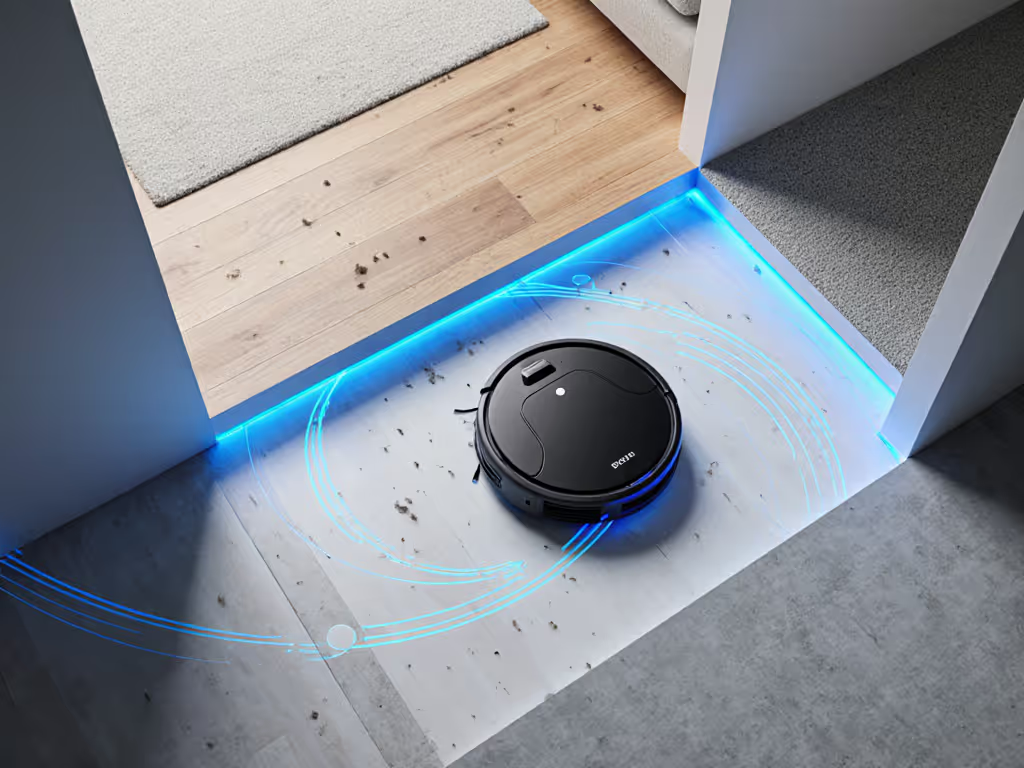
In my testing, bots scoring <12% on real rescue rate (stuck on cords, rugs, or thresholds) all shared efficient neural processing. Gimmicks like stair-climbing legs? Cool for demos. But for 90% of homes, smooth threshold navigation matters more than vertical ambitions. If raised edges are your pain point, start with our best vacuums for seamless floor transitions tested on real thresholds.
Your Intelligence Checklist: Cutting Through the Hype
Forget "AI-powered" labels. Demand proof of meaningful intelligence with these filters:
- Decibel specifics: Does noise stay consistent across surfaces? (45-50 dB max during active cleaning)
- Rescue rate: <15% in homes with mixed floors/pets (ask Reddit communities for real data)
- Edge navigation: Handles dark rugs without treating them as cliffs (a 2026 pain point)
- Offline mode: Functions fully without Wi-Fi (critical for privacy-conscious households)
- Computational transparency: Brands disclosing processor type (e.g., Qualcomm vs. Mediatek) and onboard storage
The inflection point? AI that reduces babysitting time below 5 minutes/month. If you're constantly resetting maps or untangling hair, the "intelligence" is a facade. True autonomy means scheduling a 3 PM clean during naptime and forgetting it happened.
The Quiet Intelligence Advantage
Back in my flat, the Freo Z Ultra's moment of truth came during a work call while my infant napped 10 feet away. As it navigated around dropped toys and under sofas, I heard nothing but its brush roll (a soft shush below conversation volume). No frantic beeping when it skirted a charging cable. No map resets after the dog chased it. Just calm cadence.
That's the promise of AI cleaning intelligence done right: not flashy demos, but a near-invisible ally in your home's ecosystem. It's computational efficiency translating to minutes instead of hours saved. Neural networks that prioritize your peace over data harvesting. Real-time decision making that respects your thresholds, both physical and privacy-related.
For time-starved households, intelligence isn't about what the robot can do. It's about what you don't have to do. When the tech truly blends into naps, calls, and routines, it's no longer a gadget. It's the quiet hero that keeps your home calm, one whisper pass at a time.
Ready to explore which 2026 models nail this balance? Dive deeper into our noise-tested comparisons and privacy scoring rubric.
Related Articles