Robot Vacuum Water Recycling: Eco Impact & Home Plumbing
By Aisha Noor • 3rd Mar
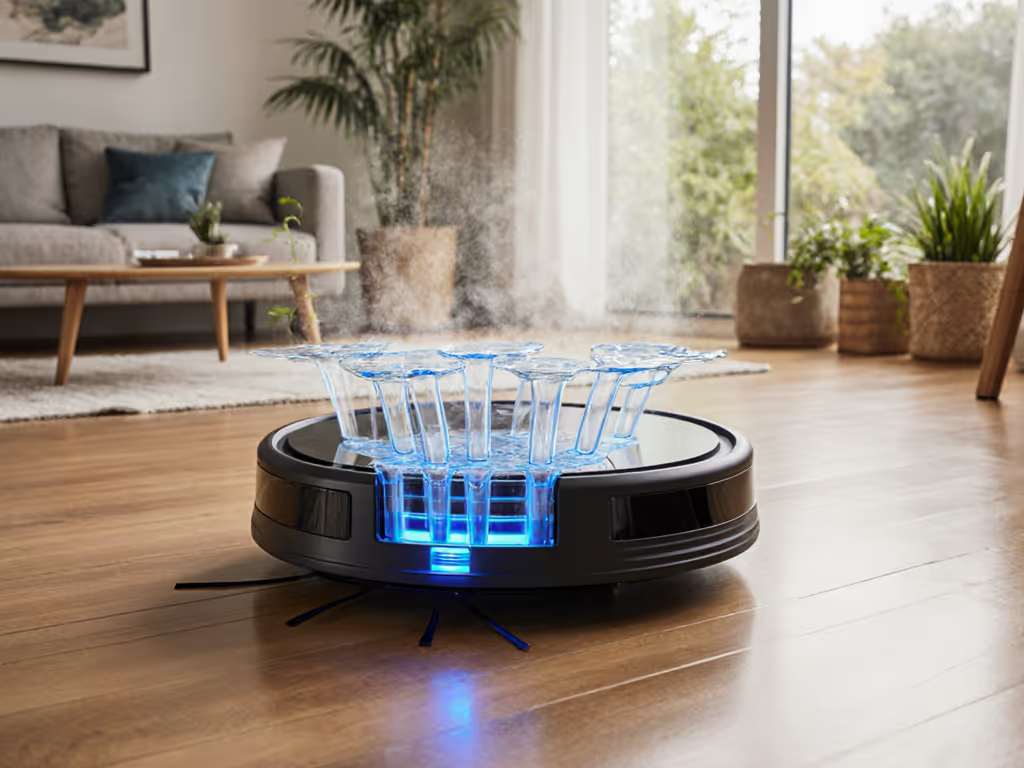
The robot vacuum and mop self-cleaning category has expanded dramatically, but a critical tension persists: as these devices tackle floors more aggressively, they demand more water, generate more wastewater, and create friction between environmental responsibility and real-world home logistics. Water recycling technology has emerged as a partial answer, yet the question lingers: Is a self-contained water system genuinely transformative, or does it trade one headache (manual refill) for another (heat, noise, infrastructure)?
The Problem: Water Waste and Plumbing Friction
Mopping robots require constant replenishment. Conventional dock stations demand manual water changes every 2 to 3 days, forcing you to physically dump, scrub, and refill tanks, a friction point that erases half the time savings these devices promise.[1] For renters, homeowners skeptical of plumbing modifications, and those in compact urban homes, installing hard-wired water supply or drainage lines is often unrealistic. Even then, retrofitting adds cost, coordination hassles, and permanent commitments to a single cleaning footprint. If refills are your main friction, compare self-refilling water systems that avoid hard plumbing and weekly top-ups.
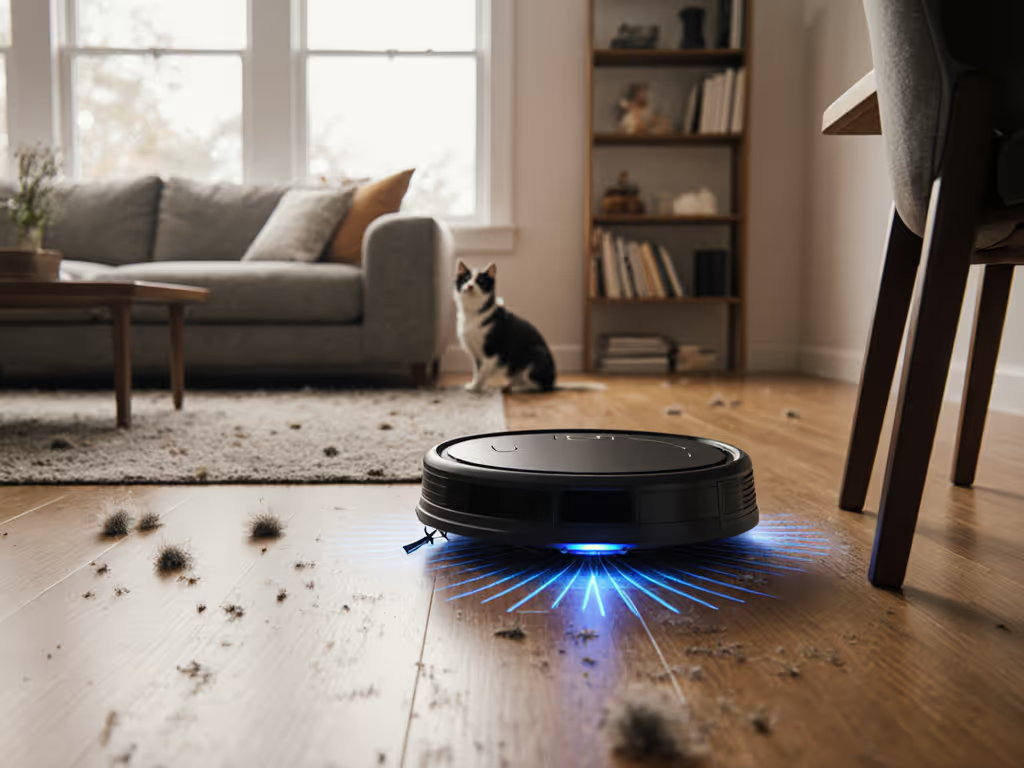
Simultaneously, water waste compounds quietly. A typical mopping cycle can consume 0.5 to 2 liters per session, and multiply that across a week or month of regular cleaning. The wastewater (soil, hair, detergent residue) flows straight to drain systems, and you've lost both the water and the chance to recycle it. For households committed to reducing environmental footprint, this inefficiency stings.
Quiet floors beat clever features when naps and meetings collide, and water management shouldn't become another distraction.
The Agitation: Hidden Costs and Maintenance Burden
Traditional systems shift the burden, not eliminate it. You're still performing manual labor, just in a different form. Replacing large volumes of wastewater weekly, scrubbing mineral deposits from tanks, and refilling detergent reservoirs transforms a five-minute dock drop-off into a 15 to 20 minute chore every few days.
Meanwhile, the environmental math doesn't close quickly. A household running a mopping robot 2 to 3 times weekly over a year uses approximately 50 to 150 liters of potable water purely for floor cleaning, water that has been filtered, heated, and treated in municipal systems, then immediately treated as waste. Over a three-year device lifecycle, that's hundreds of liters sent to wastewater treatment rather than recirculated.
There's also a psychological toll: you're acutely aware that the system demands attention. This awareness erodes the core promise of robotic cleaning: autonomy and calm. The device remains tethered to your routine rather than vanishing into it. And when you're managing a household with naps, calls, and competing priorities, another weekly maintenance task (no matter how minor) is friction you'd rather not carry.
The Solution: Water-Recycling Docks and Sustainable Mopping Systems
Recent advances in eco-friendly water management have introduced self-contained recycling ecosystems that sidestep plumbing installation and significantly reduce water waste. These systems operate on a closed-loop principle: dirty water is distilled back into clean water, solid debris is captured separately, and the robot operates nearly autonomously for weeks at a time.
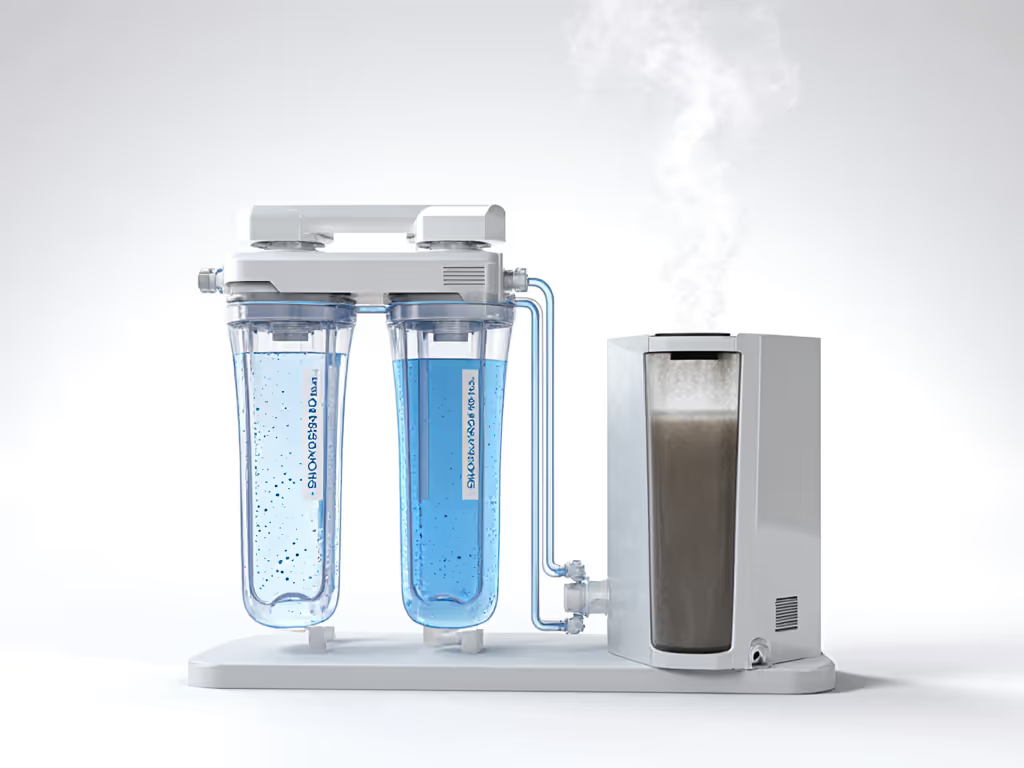
The technology works through heat-based distillation. When wastewater enters the dock's distillation tank, it's heated to approximately 90°C in a sub-boiling process, converting contaminated water into steam.[1] That steam is drawn into a condenser, where it becomes liquid again (clean, distilled water) and flows into a fresh water reservoir.[1] The remaining solids (hair, grease, soil) are mechanically separated and collected in a replaceable dust bag, typically good for two months before needing disposal.[1]
This approach delivers measurable benefits:
-
Water autonomy: A typical system eliminates manual water refills for 60+ days, contingent on dock capacity and daily cleaning load.[1] Some advanced models also extract ambient moisture (approximately 100 grams per hour when indoor humidity exceeds 60% and temperature sits between 25 to 30°C), turning air vapor into usable water during humid months.[1]
-
Reduced waste volume: By recycling water instead of draining it, households cut mopping-related water consumption by up to 99% over a device lifetime (barring manual top-ups).[1] For environmentally conscious homes, this is a tangible win.
-
Hygiene and odor control: The distillation process removes 99.99% of bacteria like E. coli, eliminating the stale water smell that plagues traditional tanks.[1][3] Silver ion modules and deodorizing filters add a secondary barrier against microbial growth, so the mop touches your floor with genuinely clean water every cycle.
-
Plumbing-free installation: Because the dock is completely standalone, you avoid expensive retrofits. Place it anywhere, such as a closet, a garage corner, or a laundry room, with no pipes, no permits, and no permanent commitment.[1]
How Automatic Refill Technology Enhances Routine Fit
Water recycling docks also integrate automatic refill technology that decouples cleaning schedules from maintenance windows. After each mopping pass, the robot returns to the dock where the system automatically drains wastewater, refills the clean water tank, and dispenses detergent in precise ratios.[1] This happens silently, invisibly, so the robot is ready for the next cycle or to sit dormant until you need it again.
The practical outcome: you schedule cleaning on your terms (early morning before calls, late evening after bedtime), and the dock manages water logistics behind the scenes. No more timing your cleaning around tank refill availability. For dual-income households juggling remote work, Zoom calls, and naps, this autonomy is genuinely valuable. The system fits the rhythm of your home rather than imposing its own.
Addressing the Trade-offs
No solution is frictionless. Water-recycling docks are heavier (approximately 36 kilograms) than conventional stations, making repositioning cumbersome if your floor plan changes.[1] They also consume electricity for heating and distillation, roughly equivalent to running a laptop charger continuously, but a real consumption nonetheless for cost-conscious households tracking energy usage. To minimize operating costs, see our picks for energy-efficient robot vacuums with 3-year power usage analysis.
Heat generation introduces a subtle noise profile: the distillation cycle produces a low hum during operation, typically 45 to 55 dB depending on the model.[2][7] If noise windows matter, our lab tests of low-noise robot vacuums include real decibel scores by mode. This is quieter than many robot vacuums themselves, yet worth testing in your home during vulnerable times (early mornings, nap windows, call schedules). Some households integrate the cycle into off-hours routines; others accept the trade-off as negligible compared to manual water changes.
There's also the question of app and data transparency. Most water-recycling docks connect to smartphone apps to report water levels, distillation cycles, and maintenance reminders.[1] Ensure the brand uses privacy-first defaults: local network operation where possible, transparent data policies, and opt-out cloud features. For a step-by-step checklist, read our robot vacuum data security guide. Your water and cleaning data shouldn't be a commodity; it should remain in your home and in your control.
Real-World Scenario: How Water Recycling Fits Your Life
Consider a suburban household with two young children, a dog, and 1,800 square feet split between hardwood, tile, and area rugs. Conventional mopping: The robot runs twice weekly, each cycle requiring a water tank refill beforehand (5 minutes) and a wastewater dump afterward (3 minutes). That's 16 minutes per week of manual labor, or roughly 14 hours annually, time pulled from other priorities.
With a water-recycling dock: The robot runs on the same twice-weekly schedule. You never refill or dump water. Instead, the dock silently distills overnight, and the app reminds you to empty the dust bag every eight weeks. Wastewater volume: negligible. Water cost: your tap usage drops by 100+ liters annually. Time reclaimed: ~14 hours per year. Calm preserved: the robot vanishes into routine.
For renters, the appeal is clearer: the dock requires no installation, no landlord approval, and no plumbing expertise. When you move, it moves with you.
Market Momentum and Emerging Options
The vacuum category has exploded. Israeli vacuum sales jumped 34.5% in the first half of 2025 compared to the prior year, with robotic models capturing over 40% of that market, more than double the prior year's segment share.[1] Among new entrants at industry events, water-recycling and distillation technologies are prominent, signaling that manufacturers see this capability as table stakes for premium segments.[2][4][5]
Emerging models vary in sophistication. Some focus purely on water distillation; others add heated mopping (water temperatures reaching 140°C for deeper sanitation) and warm-air drying cycles.[5] A few combine carpet detection with carpet-lifting mechanisms, so the mop retracts on rugs and suction power increases on hard floors, minimizing false drying and maximizing adaptability.[1] These layered features address real pain points: pet stains, spill cleanup, and mixed floor types.
Conclusion: Evaluating Water Recycling for Your Home
Water-recycling dock technology is not hype; it's a genuine shift toward lower-maintenance, more autonomous mopping robots. It eliminates the single largest friction point in current systems (manual water refills), reduces water waste dramatically, and aligns with both environmental values and practical time savings.
However, it's not a universal fit. If you have a tiny apartment, limited dock placement options, or deep skepticism about home automation, traditional systems may suffice. If you're in a humid climate with limited water access, or if you're managing a busy household where every marginal time save compounds, water recycling becomes a worthwhile investment.
Before deciding, audit your own constraints: floor layout, water access, placement footprint, noise tolerance during your vulnerable hours (calls, naps, quiet time), and three-year cost of ownership including tank replacements, filters, and electricity. Request quiet-cycle measurements from the manufacturer, verify their privacy policies (local-first storage, opt-out cloud), and seek user feedback from homes similar to yours, not marketing claims.
Explore reviews and real-world testing from users who've logged decibel peaks, water consumption, and maintenance time over months, not weeks. The best robot is the one you barely notice: in sound, in data collection, and in daily friction. Water recycling moves toward that goal; confirm it moves toward your goal too.
Related Articles