Robot Vacuum Hard Water Compatibility: Mops That Avoid Buildup
By Lucas Ferreira • 10th Jun
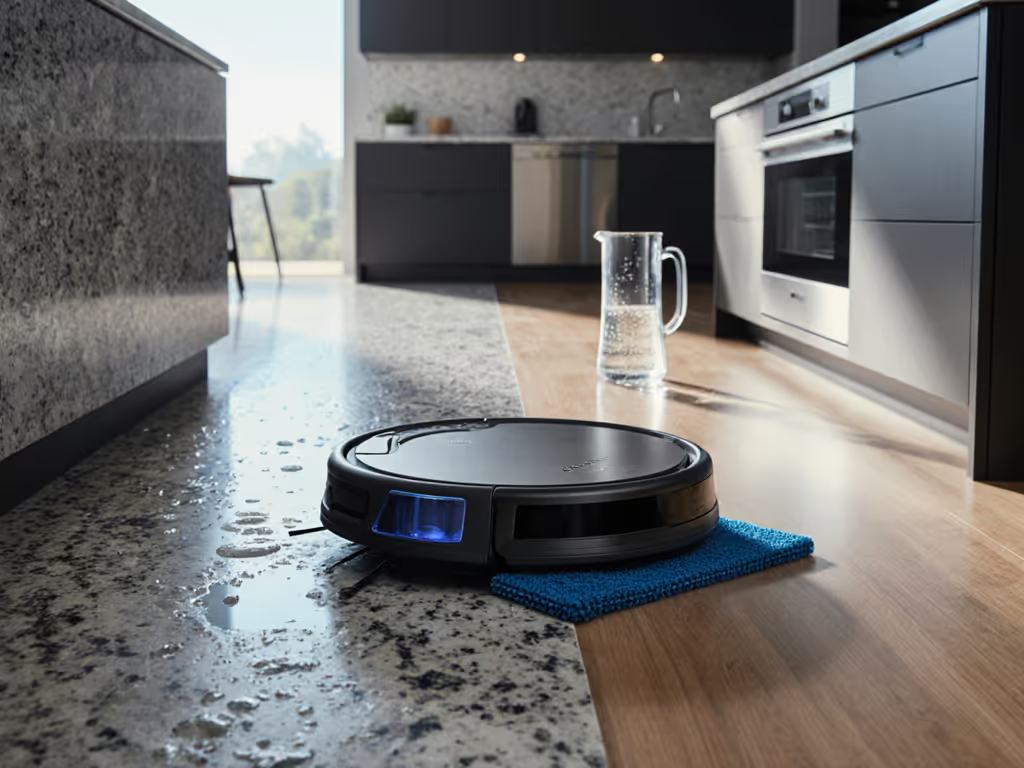
If you live with hard water and you're shopping for a robot mop, robot vacuum hard water compatibility matters more than the glossy marketing page. The right water softening mopping systems and a few simple habits mean clean floors without white streaks, clogs, or constant hand-holding.
I'll walk you through this as a checklist-driven FAQ: what hard water does inside your robot, which designs cope best, and how to set things up once so you can set once, relax often.
What does hard water actually do to a robot mop?
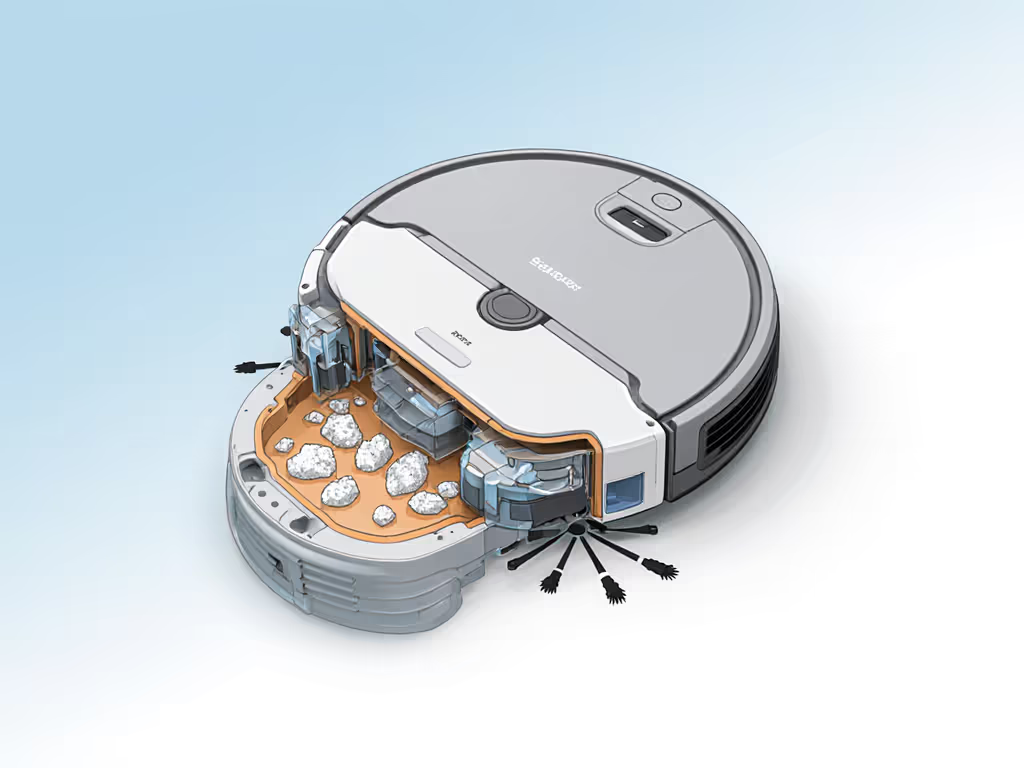
Hard water is water with a high level of dissolved minerals, mainly calcium and magnesium. Inside a robot mop, that shows up in three ways:
-
Mineral buildup in the water paths Those minerals deposit inside the tiny tubes, pumps, and nozzles that feed the mop pad, leading to partial or full clogs over time. For a technical look at how pump and nozzle design affects moisture control, see our robot mop water flow guide. In practice, that means the robot "mops" with a barely damp pad or stops wetting the pad at all.
-
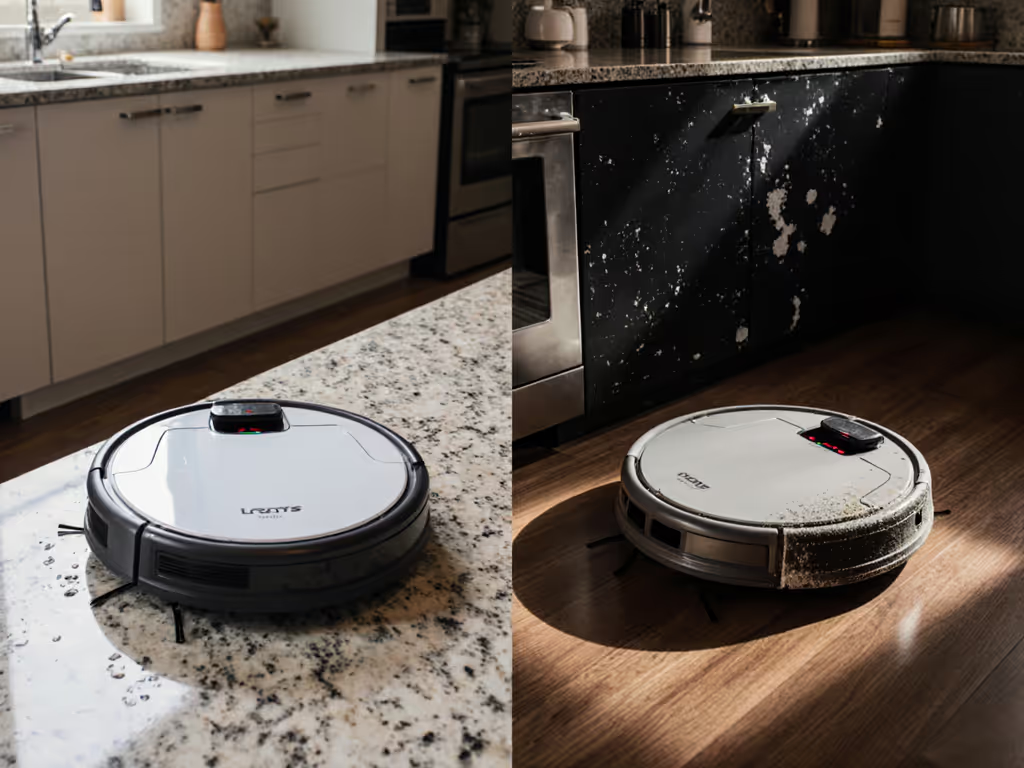
White streaks and haze on the floor When the water evaporates, minerals stay behind as a chalky, white film or spots (especially visible on darker tile or vinyl).
-
Extra wear on pumps and sensors Scale deposits can interfere with valves and water-level sensors, shortening the life of the mopping system. Wet-type vacuum systems in other industries are often fed soft water to avoid this damage, and robot mops use similar small channels and pumps.
Simple setup today prevents headaches for the next thousand runs.
If you've ever seen white "dust" on mop pads or around the water outlets, that's mineral buildup starting.
Do robot vacuums work with hard water at all?
Yes, most robot vacuums with mopping work in hard water areas, but some are more forgiving than others.
Broadly:
- Basic mop modules (small tank, gravity-fed or simple pump) usually tolerate hard water but need more frequent cleaning and descaling.
- Systems that explicitly recommend filtered or distilled water are signaling that hard water will accelerate wear and buildup.
- Models designed around proprietary solutions often depend on that detergent's formula to manage minerals and reduce residue.
Good news: even if your tap water is hard, switching to filtered or distilled water plus light maintenance dramatically cuts the risk of clogs and streaks.
What are "water softening mopping systems" in robot vacuums?
Manufacturers use a few different approaches that fall under water softening mopping systems or water softening technology:
-
Use of distilled or filtered water Many guides recommend distilled or at least filtered water to prevent mineral buildup altogether. That's "external" softening: you soften the water before it ever hits the robot.
-
Specialized cleaning solutions with chelators Robot mop detergents are often formulated with biodegradable chelators - chemicals that bind calcium and magnesium ions so they can't form limescale. This acts as an in-tank limescale reduction system, especially when the solution is designed for hard water.
-
Manufacturer-tuned, low-residue formulas Brand-specific solutions are usually pH-balanced and low-residue so they don't leave additional films or encourage buildup in the small water channels.
Most consumer robot mops do not have a classic built-in softener cartridge like a dishwasher. Instead, the "softening system" is a combination of:
- the water you feed it, and
- any detergent chemistry (chelators, low-foam surfactants) designed to work safely in those tiny tubes and pumps.
If my water is hard, what's the safest thing to put in the tank?
For most owners, especially beginners, this short rule holds:
Use distilled or filtered water plus only manufacturer-approved solutions.
Why:
- Distilled water has virtually no minerals, so it doesn't leave white residue or build scale in tubes and nozzles.
- Using distilled or filtered water significantly reduces mineral deposits and extends the life of your robot mop.
- Multiple manufacturers explicitly say: use plain clean water or their own branded solution, and avoid anything else unless your manual clearly allows it.
Best practice hierarchy:
- Check the manual
- If it says "water only": use distilled or at least filtered water.
- If it names a specific solution: use that, mixed with clean water exactly as instructed.
- Avoid unapproved cleaners
- Do not add bleach, strong acids, soaps, or essential oils to the tank; they can damage pumps, seals, and sensors or leave residue.
- Use warm (not hot) water if allowed Warm water can help dissolve residues slightly faster, but only if the manual doesn't forbid it.
This is one of those set once, relax often decisions: get the water right, and your robot will mop reliably without becoming a science project every few weeks.
Is it safe to use vinegar or descalers for mineral buildup?
This is where online advice gets messy.
- Some community posts suggest running diluted vinegar or even household descalers through the robot to clear hard-water clogs.
- However, major manufacturers often warn against strong acids, ammonia, or aggressive cleaners in the tank because they can corrode internal components or damage seals.
My beginner-safe rule set:
- Inside the tank while mopping
- Use only plain water or the branded solution explicitly allowed in your manual - nothing else.
- Descaling off the robot
- If you see visible limescale on removable parts (like a detachable tank or outlet plate), you can:
- Remove the part.
- Soak or wipe it separately with a mild descaling solution or diluted vinegar if the material and manual support that.
- Rinse very thoroughly with clean water and let it dry before reinstalling.
- When in doubt, skip DIY chemistry
- If the blockage is inside sealed tubes or pumps, contact support rather than pushing strong chemicals through the system. Hidden damage is expensive later.
Because I won't suggest risky workarounds, I treat in-tank vinegar or hardware-store descalers as last-resort, advanced tricks (not beginner defaults).
How do I prevent mineral buildup in the first place?
Here's the maintenance pattern I recommend if you live in a hard-water area. For broader upkeep beyond water issues, follow our robot vacuum maintenance checklist.
Weekly (takes 3-5 minutes)
- Empty and rinse the tank with clean water; don't leave water sitting for days.
- Flush the system by filling with distilled or filtered water and running a short mop cycle or the app's "self-clean/prime" mode if available.
- Check the mop pads for white residue; wash them if you see buildup so they stay absorbent and don't streak.
Monthly (10-15 minutes)
- Do a light descale:
- Rinse the tank thoroughly and inspect any visible nozzles or outlet channels for white crusts.
- Clean those areas with a soft brush or cloth and a mild, manufacturer-safe cleaner, then rinse well.
- Inspect inlet strainers and small filters on the water path and clean or replace them per the manual.
Every 6-12 months
- Replace worn mop pads on the schedule your manufacturer suggests, or sooner if they look flattened or stained.
Think of it like your coffee machine: a tiny bit of regular descaling beats a sudden, expensive failure.
Does hard water hurt mopping performance on the floor, or just inside the robot?
Both.
- Inside: scale slowly chokes the water system, so your mop pad is less and less damp over time.
- On the floor: dissolved minerals dry into a thin film, especially on dark tile, leaving streaks and a slightly gritty feel.
To improve hard water mopping performance on the floor:
- Run the robot with distilled or filtered water, especially on visible areas like entryways and dark tile.
- Make sure pads are clean and not saturated with dried minerals; that residue reduces absorbency and just smears the film around.
- Use a low-residue, mop-safe solution if your manufacturer offers one; these are formulated to avoid additional streaking.
If you've ever watched your robot finish a run and leave the floor looking worse (dull, hazy, or spotty), hard water plus dirty pads is a common cause. Ambient humidity can also change drying time and streaking; learn how to tune settings with our robot vacuum humidity guide.
How can I tell if my home's water is "hard enough" to worry about?
You don't need lab gear. Use these practical checks:
- Kettle or coffee maker test: if you see white crust inside your kettle or on heating elements after a few weeks, that's limescale.
- Bathroom fixtures: chalky white spots on shower heads, taps, and glass doors are classic hard-water signs.
- Soap behavior: if it's hard to get a good lather in the shower or with dish soap, hardness is likely moderate to high.
If any of these fit, treat your water as "hard" for robot mops and follow the distilled/filtered water playbook.
Are there specific robot features that help in hard water areas?
When you're comparing models, look for:
-
Removable, easy-to-rinse tanks and water paths Tanks that lift out and have wide openings make flushing and descaling far easier.
-
Access to filters/strainers on water inlets/outlets If you can pull and clean these without tools, you'll prevent a lot of clogs.
-
Official support for distilled or filtered water Manuals that mention or encourage softer water usually reflect that the system was tested for it.
-
Brand-specific, low-residue solutions A manufacturer-approved solution with chelators and low foam is a plus, especially in hard water areas.
-
Clear maintenance guidance in the app Look for robots that give cleaning reminders and simple in-app instructions for flushing the system.
Just like a mis-named room can break automations for a week, one awkward water system you hate maintaining is enough to make you stop using mopping altogether. If you live in a hard-water region, compare models in our hard water robot vacuums roundup before you buy.
How much extra time does hard-water maintenance actually add?
The goal is predictable time savings, not another chore. Prefer near-zero babysitting? Shortlist models from our self-cleaning robot mop guide that automate pad washing and drying.
With distilled or filtered water and the weekly/monthly habits above:
- Expect 3-5 minutes per week to empty/rinse the tank and check pads.
- Add 10-15 minutes per month for a more thorough flush and visual descale.
In return, your robot can handle the daily or near-daily floor mopping that would otherwise cost you hours per month - especially with kids, pets, or open-plan kitchens.
If you skip soft water and never descale, those saved minutes tend to come back as:
- frustrating mid-run failures,
- streaky floors you re-mop by hand,
- and, in the worst case, a failed pump or service ticket.
Quick "robot vacuum hard water compatibility" checklist
Use this checklist before you buy or before you change how you use your current bot.
1. Water source
- My home shows clear signs of hard water (kettle or fixtures with white scale).
- I'm willing to keep a small jug of distilled or filtered water near the dock for refills.
2. Robot design
- The tank is removable and easy to access for rinsing.
- There are visible filters/strainers on inlets/outlets that I can reach.
- The manual clearly states what can go in the tank (water only vs. specific solution).
3. Allowed solutions
- I will only use manufacturer-approved solutions or plain water, as the manual says.
- I will avoid bleach, strong acids, soaps, and oils in the tank.
4. Maintenance routine
- Weekly: empty, rinse, and do a quick flush with distilled or filtered water.
- Monthly: inspect for scale and clean pads and filters.
- I've set reminders or app notifications so I don't forget.
If you can tick these boxes, your robot is effectively a limescale reduction system in practice: it keeps up with real-world mess without succumbing to hard-water damage.
Actionable next step: set up your "hard water safe" routine in 15 minutes
To make this real in your home today, here's a simple, one-time setup flow:
- Grab supplies
- 1-2 gallons of distilled or filtered water.
- A clean container or small pitcher you'll keep near the dock.
- Mild, manufacturer-approved cleaning solution (if your manual lists one).
- Reset the tank the right way
- Empty the current tank completely.
- Rinse it with distilled/filtered water.
- Fill it only with distilled/filtered water (plus approved solution if allowed).
- Align app settings with reality
- In the app, set mop water level to medium for most hard floors unless your floor is very sensitive.
- Name a "Mop Test" room (e.g., a small hallway) and run a quick pass to check for streaks.
- Build your maintenance habit
- Add a recurring reminder: "Rinse robot mop tank" weekly and "Inspect for scale" monthly.
- If your app offers maintenance reminders, turn them on.
- Watch one full run
- On the first hard-water-safe setup, stay nearby for a run over a darker area.
- Check: pad is damp, not dripping; floor dries without haze; no obvious white spots.
Once this is in place, your robot is set up to handle hard water with minimal babysitting. That's the point of good onboarding: you set once, relax often while the bot quietly handles the boring floor work in the background.