How Robot Vacuums Learn From Every Clean
By Aisha Noor • 23rd Feb
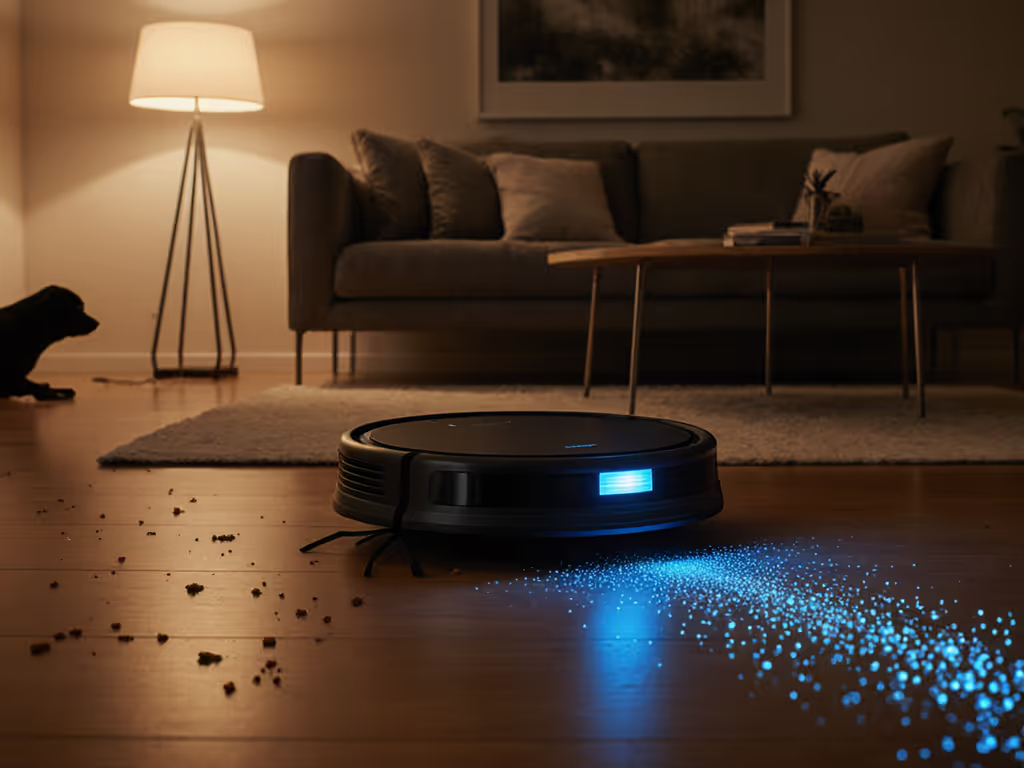
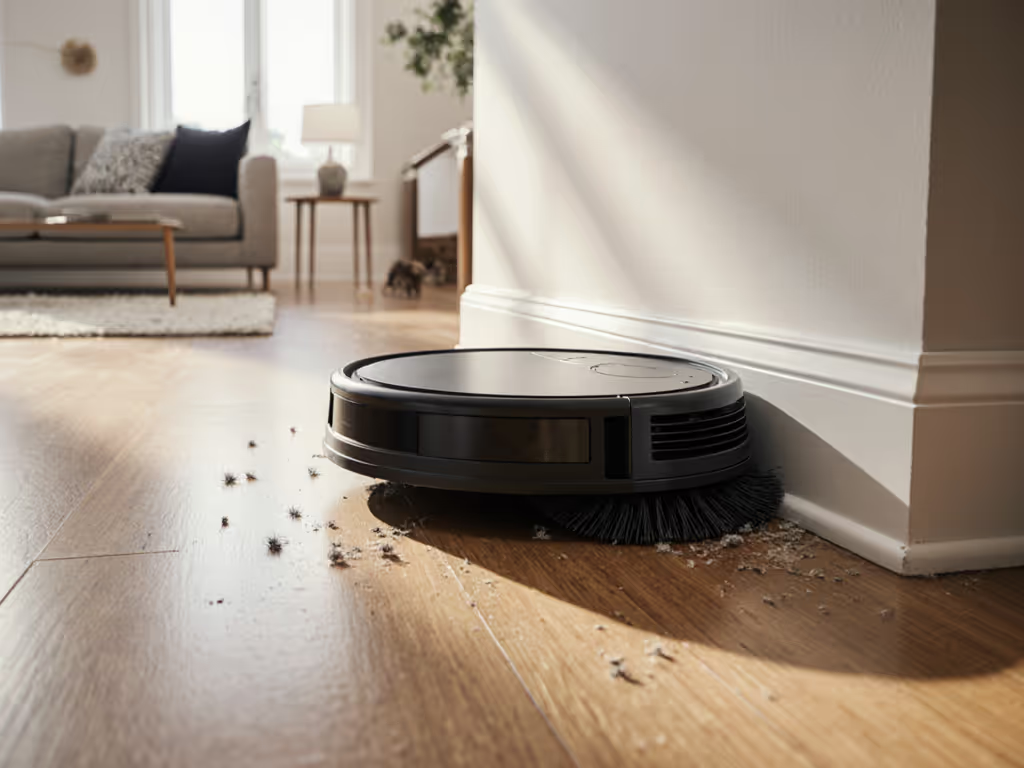
You buy a robot vacuum, and for the first week it seems promising. By week three, it's still getting stuck on the same chair leg, missing the corner by the sofa where your pet sheds most, and repeating the same inefficient path through your kitchen every single time. It hasn't learned anything about your home. It's simply running the same program, over and over. This is the problem most people face: a device that should grow smarter instead remains static, requiring constant rescues and babysitting.
When a robot vacuum fails to adapt, it becomes another chore rather than a solution. You find yourself mentally mapping hazards instead of the vacuum doing so. You schedule cleaning only when you know you'll be awake to intervene. And if you move furniture or rearrange a room, you're back to the rescue routine, because the vacuum has no mechanism to understand what changed and why it should adjust. For busy professionals, parents balancing naps and Zoom calls, and pet owners already stretched thin, a static robot is worse than useless; it's a source of frustration disguised as convenience.
But modern robot vacuums don't have to work this way. The ones built with genuine AI learning loops employ adaptive algorithms that fundamentally change the game, learning from every pass, every obstacle, every dusty corner, and every mistake to improve their performance over weeks and months.
How AI Learning Loops Actually Work
Understanding how these systems learn begins with sensors and data. Modern robot vacuums are equipped with cameras, LIDAR, and proximity sensors that capture detailed information about your home during every cleaning cycle. For the nuts and bolts of mapping and obstacle avoidance, see our expert guide. But raw sensor data alone doesn't make a vacuum smarter. It's what happens after the collection that matters.
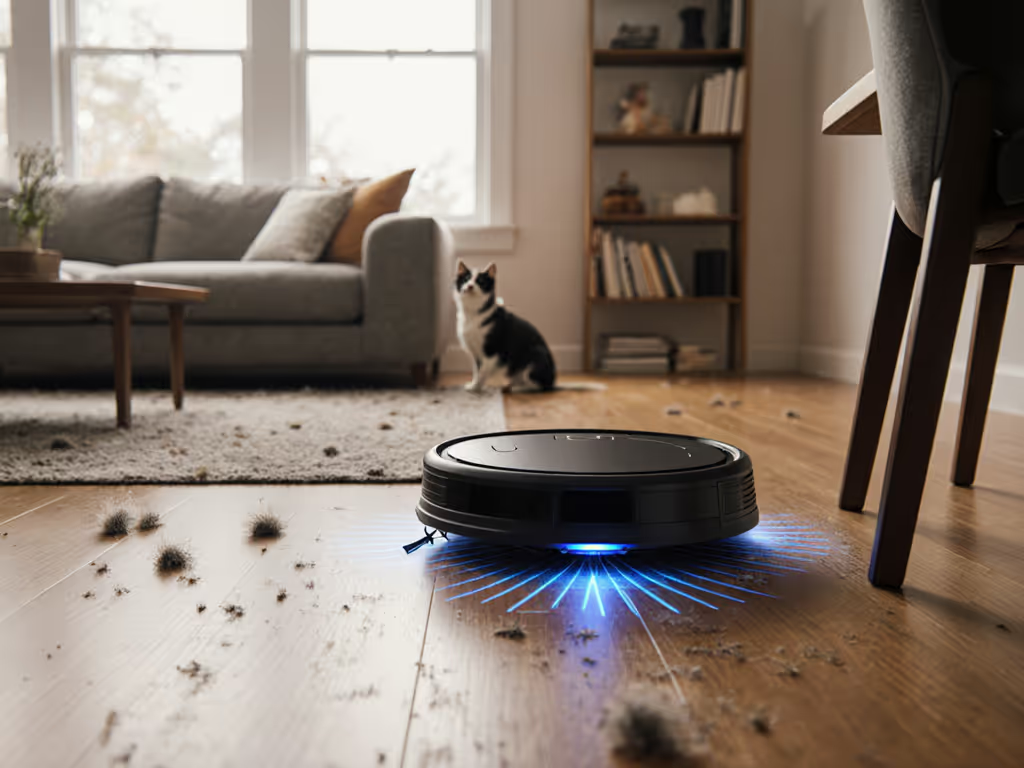
When a vacuum uses adaptive learning algorithms, it processes this sensor data through machine learning models that identify patterns. Learn how these models are built in our machine learning training explainer. For example, after several cleaning passes, the vacuum begins to recognize that a particular corner of your bedroom consistently has more dust than the hallway, or that your kitchen near the pet food bowl always contains hair clusters. Machine learning enables the vacuum to remember these dirt patterns and adjust its cleaning strategy to spend more time in frequently dirty areas without your input.
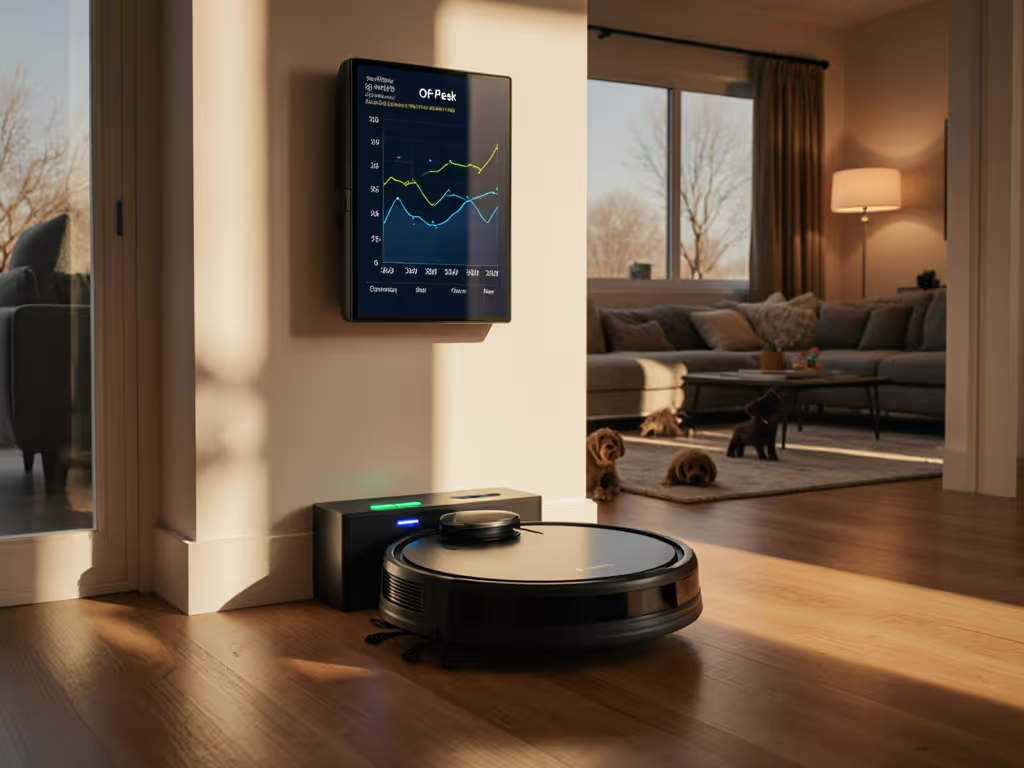
This is where the continuous improvement system takes shape. Each cleaning session contributes data that refines the vacuum's understanding of your home. Over time, the robot creates a living map, not a static blueprint, but a dynamic model that evolves as your home changes. You move the coffee table, and the vacuum detects the obstacle and updates its memory. A new rug arrives, and sensors recognize the texture difference, triggering adaptive suction adjustments.
Performance Evolution: From Maps to Maintenance
The real value of AI learning extends beyond route optimization. Advanced systems employ what researchers call cleaning data analysis (examining not just where the vacuum goes, but how it performs in different zones).
Consider a practical scenario: Your vacuum learns that hardwood floors in the living room require lighter suction to avoid dust clouds, while the bedroom carpet needs aggressive brush engagement for deep hair removal. Rather than running at constant power (which wastes energy and creates unnecessary noise), the vacuum adjusts in real time based on what it's actually encountering. Over weeks, it refines these adjustments, identifying the precise suction level and brush speed that delivers clean floors without the harsh decibel spike that disrupts work-from-home calls or afternoon naps.
This is where performance evolution becomes tangible. A study of how robots adapt to new environments shows that machines using reinforcement learning improve their path efficiency by learning from interactions (each attempted route, each collision avoided, each corner cleaned contributes feedback that sharpens future decisions). For a household managing overlapping schedules and shared quiet spaces, this translates to a robot that grows quieter and more efficient over time, not louder or more chaotic.
Machine learning also allows the vacuum to detect when maintenance is needed before failure occurs. Use this robot vacuum maintenance checklist to keep performance consistent between cleans. If sensors indicate brush wear or filter saturation, the system can alert you with specificity: "Brush cleaning recommended in 3 days based on current shedding patterns." This is far more useful than generic time-based reminders, because it's calibrated to your home's actual demands.
Why This Matters for Your Routines
For the busy households that make up the core market for robot vacuums (dual-income couples, parents coordinating school and work, remote workers sharing apartments), the learning capability directly addresses a central pain point: time that the device doesn't require from you.
A vacuum that truly learns doesn't need constant rescue. It doesn't forget your layout after a firmware update. It doesn't repeat the same mistakes because it has no mechanism to correct them. Instead, it gets better at anticipating obstacles, adapting to your floor mix, and running in modes calibrated to the noise and timing constraints of your home. Map once, glide often, that's the ideal, and AI learning makes it real.
Privacy-conscious households should note that this learning occurs primarily through local processing. Harden your setup with our robot vacuum data security guide. Most advanced vacuums store mapping and behavioral data on the device itself, updating their models without requiring every cleaning decision to transit to a cloud server. The data that matters most (your home layout, your furniture, your pet's shedding patterns) stays on your device.
The Practical Edge: What to Look For
When evaluating a robot vacuum, seek evidence of genuine adaptive learning, not just marketing language. Look for systems that:
- Use SLAM or similar mapping technology with continuous refinement, so the map improves after each cleaning rather than remaining static.
- Adjust suction and brush behavior dynamically based on floor type and dirt detection, not preset modes you have to manually toggle.
- Remember obstacles and dirt hotspots over time, concentrating effort where it actually helps.
- Provide granular maintenance alerts based on real usage, not generic schedules.
- Operate with transparent data handling, storing behavioral and mapping data locally whenever possible.
The presence of terms like "reinforcement learning," "real-time obstacle adaptation," and "machine learning-optimized cleaning paths" indicates a design philosophy where the vacuum actually improves with use rather than remaining a static appliance you're attempting to manage.
The Calm Home Advantage
At its core, a vacuum that learns from every clean is a vacuum that disappears into your routine rather than demanding attention from it. It grows quieter and more efficient as your home's unique patterns emerge. It respects the timing and noise constraints of your life. It requires fewer rescues, fewer resets, and fewer frustrations.
For households where naps and meetings collide with cleaning needs, where pets add unpredictable shedding patterns, and where time is genuinely scarce, a robot that adapts and improves is not a luxury, it's the difference between a device that solves a problem and one that creates additional burden.
Moving Forward
If you're considering a robot vacuum purchase, explore models that prioritize adaptive learning as a core feature rather than a side benefit. Ask manufacturers specific questions: How does the system improve after 10 cleanings? What data does it collect locally versus in the cloud? Can you review performance metrics in the app? Our robot vacuum app guide shows how to use zones, schedules, and performance dashboards effectively. Does it adjust behavior based on detected obstacles?
The best robot is the one you barely notice, in sound and data. That happens when genuine learning is built in from the start.
Related Articles